Space Exploration Merit Badge · Night 2 of 5
How Rockets Work
Requirements 3 (parts) and 4 (principles of space flight)
Push something back. Go forward.
Monday, September 28, 2026
~20 min of slides + 20 min hands-on
Space Exploration Merit Badge · Night 2 of 5
Requirements 3 (parts) and 4 (principles of space flight)
Push something back. Go forward.
ASK THE ROOMDo these forces act on the same object—or on different objects?
Nine parts. The requirement says identify AND explain — so for each one you owe me what it does, not just what it's called.
Nine parts, requirement 3(a) through 3(i). Tap one.
Streamlined tip that cuts drag. Friction-fit so the ejection charge can pop it off — snug, but it must pull free by hand.
Whatever the rocket is carrying that isn't needed to fly: an altimeter, a camera, a raw egg. The reason the rocket exists.
Parachute or streamer, plus shock cord and wadding. Turns a falling rocket into a landing one.
The airframe. Holds everything in line, carries flight loads, and sets the diameter that drives drag.
Small tube glued to the outside that slides over the launch rod. It keeps the rocket pointed straight until it's fast enough for the fins to work.
Move the center of pressure behind the center of gravity so the rocket weathercocks into stability instead of tumbling.
Inner tube, centering rings, and a retainer that hold the motor on the centerline and take the thrust into the airframe.
Propellant grain, nozzle, delay charge, and ejection charge in one cardboard tube. C6-5 = C impulse, 6 N thrust, 5 s delay.
Thin wire that glows hot when the controller closes the circuit, lighting the propellant. Also called a starter.
Newton's third law is the whole reason a rocket works in vacuum.
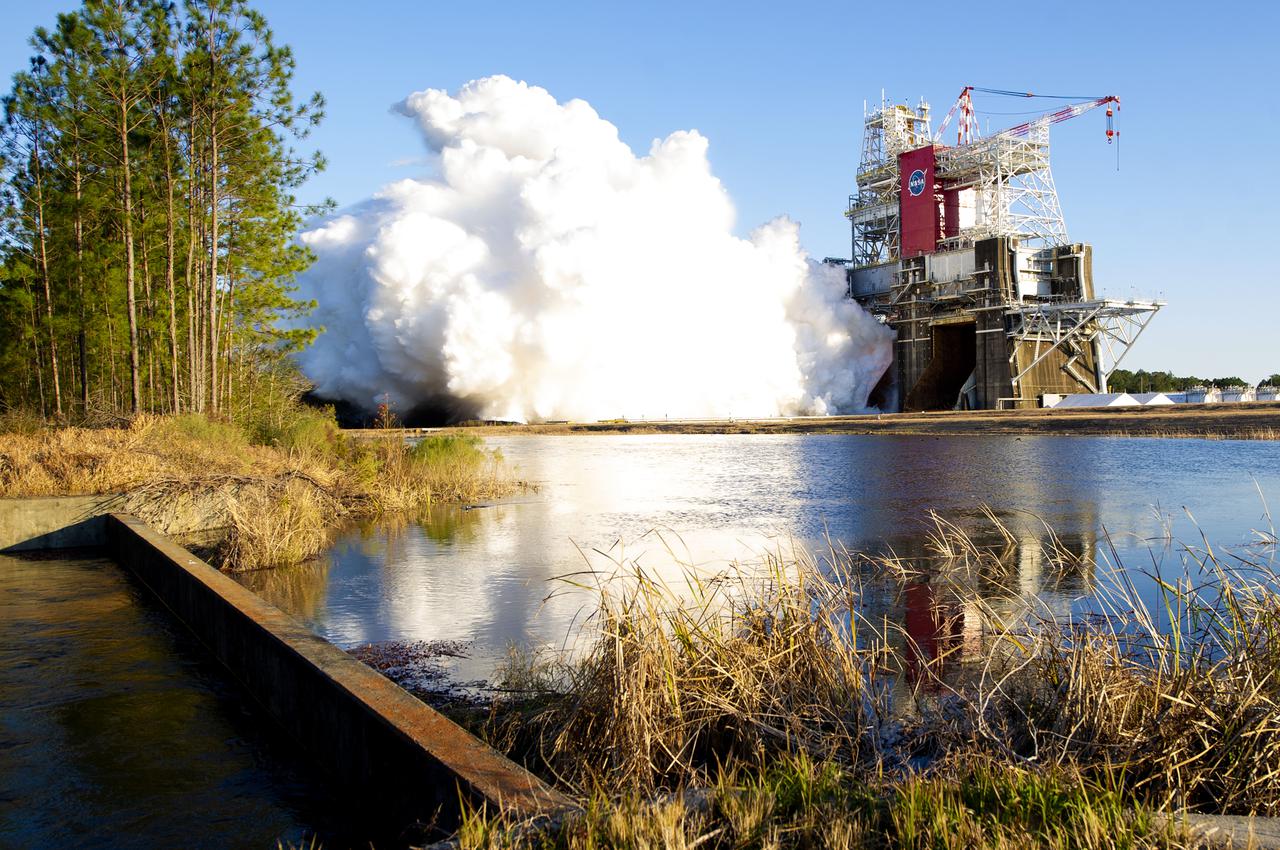
Requirement 4 says 'discuss AND demonstrate.' The balloon is the demonstration. Do not skip it to save four minutes.
Same airframe every Scout is building. Change the motor and the payload and watch what happens to thrust-to-weight — the number that decides whether it goes straight up or corkscrews off the rod.
Pick an airframe and a motor and watch the flight profile. Adding payload costs altitude twice over — more mass to lift, and less speed at burnout.
Everything an engine does comes from one sentence: throw mass backwards, hard.
A jet engine breathes air. A rocket carries its own oxidiser, which is why it works on the Moon and a jet does not.
One cardboard tube does four jobs in sequence. Tap each stage — and notice that the two numbers in the motor code are two of those four jobs.
Four things happen inside one cardboard tube. Tap a stage.
1. Ignition The igniter glows red-hot inside the nozzle and lights the propellant grain from the bottom.
2. Thrust Propellant burns, gas accelerates through the nozzle throat, and the reaction pushes the rocket up. The 6 in C6-5 is the average thrust in newtons.
3. Delay Propellant is gone. The delay grain smoulders and makes tracking smoke while the rocket coasts to apogee. The 5 in C6-5 is these seconds.
4. Ejection The ejection charge fires forward, pressurises the body tube, and pops the nose cone off so the parachute comes out.
The delay decides when the chute comes out. Drag it away from apogee in either direction and watch what happens to the rocket — and to your time aloft.
The ejection charge fires when the delay grain burns through. Too early and the rocket is still fast enough to shred the parachute; too late and it is already falling.
Use the launch simulator in this course, choose a motor and payload, and write down your predicted apogee. That number goes on your competition card and you cannot change it after launch day starts.
Play through, ~4 min.
Without video: Run the next orbit simulator. Compare straight up with sideways speed: orbit means falling while continually missing Earth.
Launch it yourself. Straight up and it falls straight back, no matter how much fuel you burn. The only thing that puts you in orbit is horizontal speed — about 7.8 km/s.
Orbit is not about height, it is about sideways speed. Go straight up and you fall straight back. The trick is turning that climb into a horizontal velocity of about 7.8 km/s before the fuel runs out.
Earth radius 6,371 km, μ = 398,600 km³/s². Thrust is modelled as a constant 30 m/s² along a simple gravity-turn program — real rockets throttle and stage.
A camera on Mars is useless without the other five-sixths of the system. Tap any step: the top row is our rocket, and the same step on a planetary mission is underneath.
Six steps get a number from a rocket to a laptop — and the same six get a photograph from Mars. Tap one.