Estes Cosmic Cargo kit
ProvidedBeginner level, no glue needed for the main structure, and it has a real payload bay. Yours to keep.
← Back to Scouts · Space Exploration badge page · Telemetry Rocket capstone · Ground station · Teaching cards
Scouting America · Troop 308 · Merit Badge Series
Five Monday-night 45-minute blocks and a Saturday launch day the weekend before Thanksgiving, taking a Scout from “why do we go to space” to a rocket they built, predicted, flew, recovered, and analyzed. Every minute is mapped to a requirement, and the badge gets signed off with paperwork on a table — not on a tailgate in the wind.
Eight requirements. Come to five Monday sessions, make a space pioneer card, build your rocket, research a career, and come to launch day on November 21. Everything else we do together in the room. Three things happen on your own time — the pioneer card, the build, and the career research — and none of them takes more than an evening.
Everything you personally have to do, in the order you have to do it. The counselor's side of this page has the run-of-shows and the gear lists — you don't need any of that. You need this.
All eight requirements with a box for each one. Tick them off as you go; it saves in this browser, so it will still be here next Monday. Print it and bring it to meetings, or keep it on your phone — either way, this is the sheet I initial.
Scouting America · Troop 308
Your own record for the whole badge. Tick things off as you go — it saves in this browser, so it will still be here next Monday. A ticked box means done and reviewed with me.
Tell the purpose of space exploration and include the following:
Design a collector's card, picture on the front and information on the back, about your favourite space pioneer.
Built to the National Association of Rocketry safety code. Two launches — the second one accomplishing a specific objective.
Identify and explain each part on your own rocket.
Alternative, only where local law prohibits launching: make a model of a NASA rocket, explain the functions of the parts, and give its history.
Discuss AND demonstrate each of these — demonstrating is half the requirement, so be ready to show, not just say.
Exactly two. Most Scouts on this course take 5a and 5c.
Purpose, operation and components. All three, about one of them.
Somewhere in our solar system. Make drawings or a model, and plan for all four.
ONE career. Research it, discuss what you found — and say what about it interests you, which is the half people forget.
Based on the Space Exploration merit badge requirements published by Scouting America. If anything here differs from the official requirements, the official requirements win — check them here ↗.
$0. The troop buys your kit, both motor packs, and your wadding. Kits handed out Monday, September 28 — earn yours first.
Everybody flies the same rocket on purpose. The competition is scored on how well you predict your own flight, not on who spent the most, so an identical airframe makes it a fair fight — and now nobody's flight depends on what their family can spend. You do not order anything. You earn your kit by clearing the four things below, and I hand it to you.
Beginner level, no glue needed for the main structure, and it has a real payload bay. Yours to keep.
Your first flight. Lower and slower, so it's easier to track and easier to get back.
Your scored competition flight.
Protects the parachute from the ejection charge. Never fly without it.
The only things you need from home are sandpaper, masking tape, and spray paint if you want to decorate it. White glue helps but isn't required for this kit. Nothing here costs you anything — if you are missing something, ask me and it appears.
Four things. Clear them and the kit is yours on September 28. These are Troop 308 rules about who gets handed hardware and who stands on our range — they are not extra merit badge requirements, and missing one does not stop you earning the badge.
Your 'mission objective' is what you're trying to find out on your second flight. It has to produce a NUMBER. Good ones: how much altitude do I lose per gram of nose weight; how much farther does a streamer drift than a chute; how different are two supposedly identical flights. Bad one: 'launch it again.'
Scouting America publishes a page for every single requirement on this badge. It is free, there is no pamphlet to buy, and it is the same text I am marking you against. If you only open one link on this whole page, make it this one — and if you miss a Monday, this is how you catch up.
Open the Digital Resource Guide ↗
Requirement 2 is one card about your favourite pioneer, plus talking with me about four others. This is the same list as the paper handout — same 26 people, same numbers — so you can use whichever you have to hand. Claim your card name at Meeting 1.
Requirement 2 · 26 choices
Mark one as your card, and at least four more you could talk about. Claim your card name at Meeting 1 — no two Scouts do the same person. A pioneer can be a flyer, engineer, programmer, scientist, writer or leader who made a “first” possible.
Calculated flight paths for Alan Shepard, John Glenn and Apollo. Before Glenn flew, he specifically asked for Johnson to check the new electronic computer's orbital calculations by hand.
Card angle Math that made human spaceflight possible
Led the MIT team that developed Apollo guidance software. Her team designed software that could prioritise critical tasks when the Apollo 11 computer became overloaded during the lunar landing.
Card angle How software helped save the Moon landing
Built and launched the first liquid-fuelled rocket in 1926. He tested pumps, gyroscopes and steerable rocket systems long before spaceflight was practical, despite public ridicule of his ideas.
Card angle The experiments behind modern rockets
Published the rocket equation in 1903 and showed mathematically why high-speed rockets need to throw mass backward. He also wrote about multistage rockets and living in space decades before they existed.
Card angle The mathematics of reaching space
Directed the programme behind Sputnik, the first satellite, and Vostok 1, the first human spaceflight. During his lifetime the Soviet government kept his identity so secret he was known publicly only as the “Chief Designer.”
Card angle The hidden engineer behind major space firsts
Led development work that culminated in NASA's Saturn V Moon rocket. His earlier work on Nazi Germany's V-2 programme, including its use of forced labour, makes his legacy scientifically important and morally difficult.
Card angle Saturn V — and the complicated history behind it
Became the first human in space on April 12, 1961. Vostok 1 completed one orbit of Earth in about 108 minutes, proving a person could launch, experience orbit and return safely.
Card angle The first human voyage beyond Earth
Became the first American in space on Freedom 7 in 1961. Ten years later he commanded Apollo 14, walked on the Moon and famously used a makeshift club to hit golf balls on the lunar surface.
Card angle From a 15-minute flight to walking on the Moon
Became the first American to orbit Earth aboard Friendship 7 in 1962. He returned to space on the shuttle Discovery in 1998 at age 77, becoming the oldest space traveller at that time.
Card angle Two spaceflights separated by 36 years
Commanded Apollo 11 and became the first person to step onto the Moon in 1969. Before NASA he flew experimental aircraft as a test pilot; as a youth he earned the Eagle Scout rank.
Card angle Test pilot, Eagle Scout and first Moon walker
One of the original Mercury Seven, Grissom flew Mercury-Redstone 4 and commanded Gemini 3. He and crewmates Ed White and Roger Chaffee died in the Apollo 1 ground-test fire, leading to major spacecraft safety changes.
Card angle Exploration, risk and lessons from Apollo 1
Became the first woman in space aboard Vostok 6 in 1963. A former textile worker and amateur parachutist, she spent nearly three days in orbit and remains the only woman to have flown a solo space mission.
Card angle The first woman — and a solo mission
Became the first American woman in space aboard Challenger in 1983. A physicist, she later served on the investigations of both the Challenger and Columbia accidents and became a major science-education advocate.
Card angle Astronaut, physicist and safety investigator
Became the first African American in space aboard Challenger in 1983. An Air Force pilot and aerospace engineer, he flew four shuttle missions and helped establish a new era of more diverse astronaut crews.
Card angle Engineering, flying and a barrier-breaking first
Became the first African American woman in space aboard Endeavour in 1992. She is also a physician who served in the Peace Corps and has worked to connect science, medicine, technology and education.
Card angle A career combining medicine and spaceflight
Became the first Hispanic woman in space in 1993. An electrical engineer and optical-systems researcher, she flew four shuttle missions and later became director of NASA's Johnson Space Center.
Card angle From engineering laboratory to NASA leadership
Became the first woman to pilot a Space Shuttle in 1995 and the first woman to command one in 1999. She later commanded the 2005 Return to Flight mission after the Columbia accident.
Card angle Breaking barriers in spacecraft command
Led the science team for NASA's Spirit and Opportunity Mars rovers. Each rover was designed for about 90 Martian days, but Spirit worked for years and Opportunity explored Mars for nearly fifteen years.
Card angle How a 90-day rover mission lasted for years
As a teenager in a West Virginia coal town, Hickam and his friends taught themselves to build rockets — the story told in Rocket Boys and the film October Sky. He later became a NASA engineer.
Card angle A teenager building rockets on the way to NASA
His 1865 novel From the Earth to the Moon imagined a crewed Moon voyage more than a century before Apollo. Some details were remarkably suggestive of the future, including a Florida launch region and ocean recovery.
Card angle How imagination anticipated real spaceflight
In 1945 Clarke described how satellites in geostationary orbit could relay communications around Earth. The concept became fundamental to modern satellite communications; he later wrote 2001: A Space Odyssey.
Card angle Predicting the communications-satellite age
Heinlein wrote technically minded stories about rockets, lunar travel and future societies when human spaceflight was still imaginary. His books helped make space travel feel achievable to generations of young readers.
Card angle How stories can inspire engineers and explorers
Designed SpaceShipOne, which in 2004 became the first privately funded crewed spacecraft to reach space and won the Ansari X Prize. Its air-launched, reusable approach challenged traditional spacecraft design.
Card angle The first privately funded crewed spacecraft
Founded SpaceX in 2002. Falcon 9 made landing and reflying orbital-class boosters a regular part of launch operations, while Dragon spacecraft began carrying cargo and astronauts to the International Space Station.
Card angle Making orbital rocket reuse routine
Founded Blue Origin in 2000 with a long-term goal of expanding human activity in space. The company developed reusable New Shepard suborbital vehicles and the much larger New Glenn orbital rocket.
Card angle A different strategy for reusable spaceflight
Founded Virgin Galactic to pursue commercial suborbital human spaceflight. In 2021 he flew aboard VSS Unity on a suborbital mission, becoming one of the company founders to fly on his own space system.
Card angle Turning suborbital flight into a passenger experience
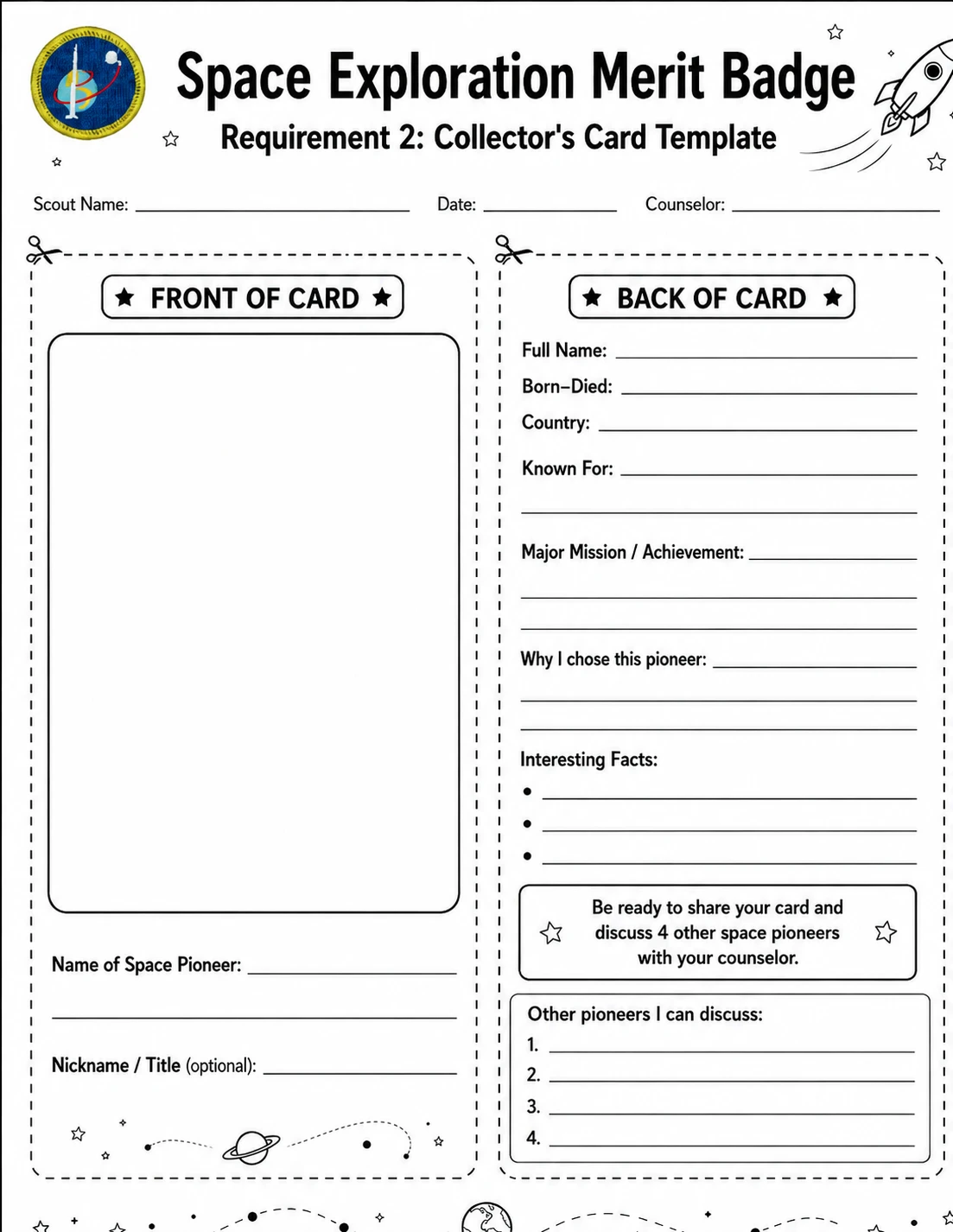
Once you have picked your pioneer, this is the card you make. I hand these out on paper — this copy is here for when you need another one.
Requirement 2 · printable template
Print it, cut along the dashed lines, fill it in. Front: a picture of your pioneer. Back: who they were, what they did, why you picked them, and a few facts. Hand-drawn scores exactly the same as printed — the requirement asks for a picture on the front and says nothing about how it got there.
There is also room on the back for the four other pioneers you can discuss, which is the half of requirement 2 people forget.
You do not have to watch any of this. But if you show up to a night having watched the video for it, that night is more fun and you'll finish the requirement faster. Everything here is short.
What to do: Nothing to prepare. Just show up.
What to do: This is requirement 2, straight out of the badge: a collector’s card — like a baseball card — about a “space pioneer.” That means anyone who did something first or made a first possible: engineers, mathematicians and flight controllers count as much as astronauts. Claim a name at Meeting 1 (no duplicates) — the pioneer list further up this page has 26 to choose from, each one linked to a real biography — then make the card. Front: a picture. Back: who they were, what they actually did, why it mattered, and one thing that surprised you. Hand-drawn scores the same as printed — it is a 30-minute job. Then be ready to talk about four OTHER pioneers, which you pick up from your patrol’s cards.
What to do: Read the NAR safety code before this meeting — you have to pass a quiz on it before I hand you a kit. Play with the launch and recovery simulators on this page; they are the same physics you'll be predicting on launch day.
What to do: Pick one robotic mission and one crewed mission you actually find interesting. You'll be asked what each one discovered and why it mattered — so pick ones you want to talk about.
What to do: Think about where you'd want to live: the Moon, Mars, Titan, Europa, an asteroid, or floating in the clouds of Venus. You'll design it with your patrol.
What to do: Pick ONE job — not 'astronaut' unless you mean it. Find out: the training and education it needs, what that costs, whether anyone is hiring, what it pays, what you'd actually do all day, and where it leads. Then the part people forget: be ready to tell me what about that job makes it interesting to YOU. Half a page is plenty. You can research it online, at the library, or by interviewing someone who does it — ask a parent first if you are contacting anyone.
Your kit arrives in the post and you build it at home. Take your time. If anything goes wrong or you would rather have help, bring it to the November 16 meeting — there is a help desk open all night, spare parts, and no judgement whatsoever.
Build at home · help desk Monday, November 16
~6 min of slides, then 38 minutes of hands
Space Exploration Merit Badge · Build it at home
Requirement 3 — build it, and build it straight
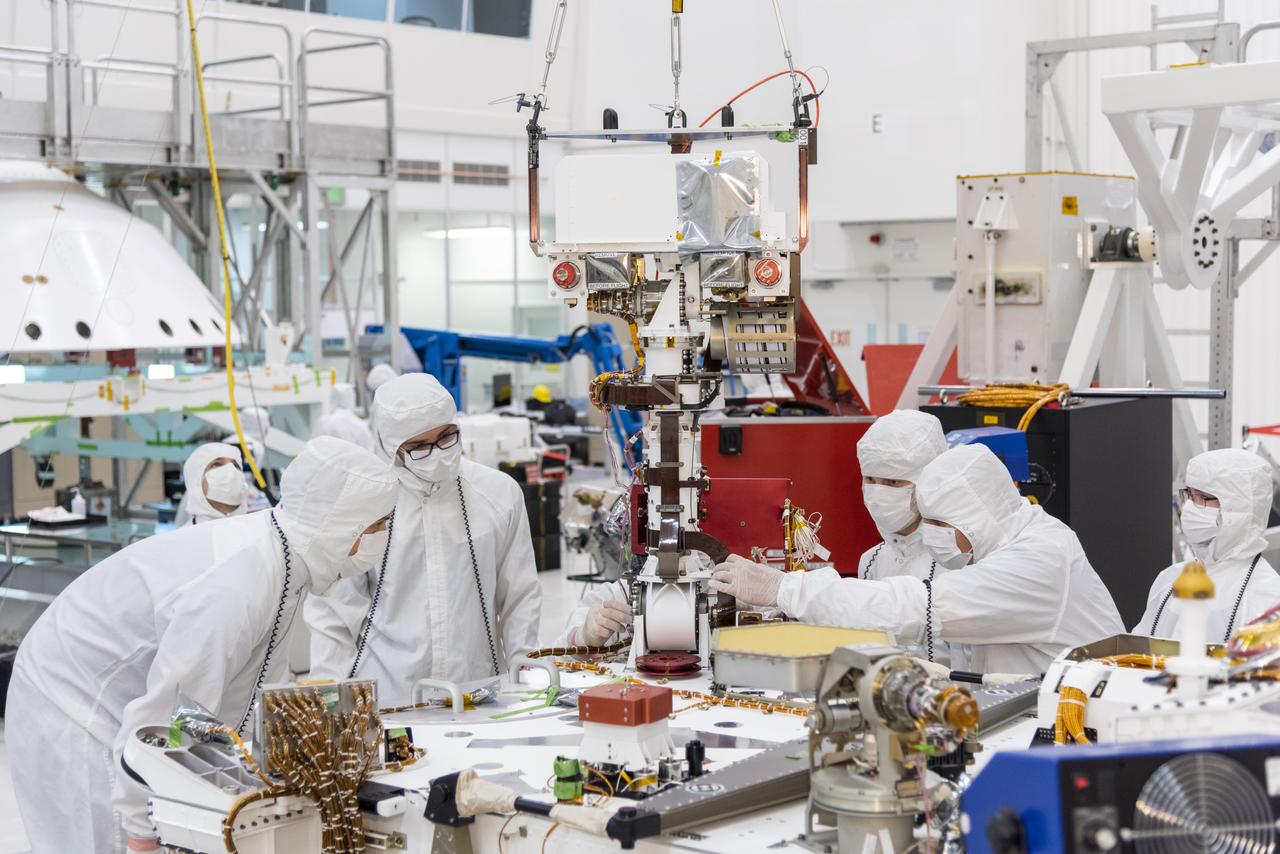
Older Scouts who have built before are station leads tonight, not builders. That is a teaching assignment and it counts toward Star and Life.
Leave this projected all night. The Cosmic Cargo needs no glue for the main structure, so most of tonight is careful assembly, alignment, and finish.
← → move · N notes · Esc exit
Eight positions with real callsigns. You will pick yours on November 16 and practise the calls, then run it for real on the 21st. Have a look at what each station does — and try the countdown clock.
Eight positions. At 6–10 Scouts everybody has one, and they rotate every flight so nobody spends the morning holding a clipboard. Callsigns are used on the range and nowhere else — that is exactly what makes them work.
Counselor, or a Life/Eagle Scout who has done this before
Runs the countdown, polls the room, and is the only voice that can say launch or scrub. Everyone else reports to Flight.
Holds: The countdown card and the launch key.
A registered adult — always an adult, no exceptions
Inspects every rocket before it goes to the pad, owns the safety perimeter, and can stop a countdown at any point without giving a reason.
Holds: The inspection cards and a whistle.
Older Scout
Loads the rocket, connects the igniter clips, confirms continuity, and calls the pad clear. Last person to step back from the rail.
Holds: The launch controller and the safety key.
Any Scout
Reads wind speed and direction before every flight, watches for the gust that arrives during the count, and calls the wind hold.
Holds: Wind meter or a ribbon on a stick, and the wind log.
Any Scout — rotates each flight
Confirms the altimeter is armed and in the payload bay before the rocket goes on the rod, then reads it out after recovery and writes the number on the board next to that Scout's prediction. Nothing gets scored until DATA has called it.
Holds: The altimeter log board and a pen that works.
Two Scouts, one with binoculars
Tracks the rocket through the whole flight, calls the landing bearing, and leads the walk-out. Nobody moves downrange until Recovery is released by Flight.
Holds: Binoculars and the recovery log.
Two adults, timing independently
Starts on liftoff, stops on touchdown. The two times are averaged — that average is the Time Aloft score.
Holds: Two stopwatches.
Any Scout who wants the mic
Announces each flight to the crowd — Scout's name, rocket name, motor, and predicted altitude — then reads the measured result after recovery.
Holds: The flight cards and a loud voice.
Flight calls each station by name. Each answers GO or NO-GO. One NO-GO stops the count — and any Scout may call it without having to explain first.
Poll not started.
One card per flight, filled in before the rocket leaves the table. Print a stack of them. The card is what the RSO signs, what PAO reads out, and what the score gets written on — so it is also the paper trail for requirement 3.
Print one per Scout per flight, plus spares. Two flights each means at least 20 cards for a troop of ten.
The same physics you'll be predicting on launch day. Change one thing at a time and watch what happens — this is how you get good at the prediction contest without spending a dollar on motors.
Pick an airframe and a motor and watch the flight profile. Adding payload costs altitude twice over — more mass to lift, and less speed at burnout.
The ejection charge fires when the delay grain burns through. Too early and the rocket is still fast enough to shred the parachute; too late and it is already falling.
Not required for the badge, but this is the part that makes space actually strange. Orbit is not about going up; it is about going sideways fast enough that you keep missing the ground.
Orbit is not about height, it is about sideways speed. Go straight up and you fall straight back. The trick is turning that climb into a horizontal velocity of about 7.8 km/s before the fuel runs out.
Earth radius 6,371 km, μ = 398,600 km³/s². Thrust is modelled as a constant 30 m/s² along a simple gravity-turn program — real rockets throttle and stage.
You are already in a 300 km circular orbit. One burn at the right moment stretches that circle until its far end reaches the Moon — and the Moon has to arrive at the same place at the same time.
Earth and Moon gravity both integrated. Moon at 384,400 km on a circular 27.3-day orbit. A real mission also has to plan the return.
The prize is not for flying highest. It's for knowing how high you'll fly.
An altitude contest rewards whoever bought the biggest motor. A prediction contest rewards whoever thought hardest. Every Scout flies the same airframe from the same pad, so the only variable left is how well they modeled their own rocket — which is exactly what requirement 4 is trying to teach. It also means the youngest Scout can beat the oldest, and does, about a third of the time.
Lowest percent error between the sealed prediction and the altimeter reading on flight 2.
Altimeter + sealed cardHighest measured apogee. Everyone flies the same airframe and the same motor class, so this is a build-quality contest — straight fins, light paint, clean finish — not a spending contest.
Estes altimeterLongest time from liftoff to touchdown. Rewards getting ejection right at apogee and picking the right recovery device. Timed by two adults with stopwatches; the two times get averaged.
Two stopwatches, averagedDeclared a specific objective at the gate, flew it, and can state the result with a number and a unit.
Competition cardBoth flights recovered, rocket still flight-worthy at the end of the day. Rewards the boring virtues that actually win engineering programs.
Post-flight inspectionJudged before the first launch by a non-parent: fin alignment, finish, and originality of paint scheme.
Non-parent judgeBest written explanation of why a flight went wrong. Deliberately the most fun award to win.
Written on the fieldThe trade-off. Max Altitude and Time Aloft pull in opposite directions, and that is the point. Altitude wants a light rocket and a streamer that drops fast; Time Aloft wants a big parachute that then drifts halfway across the field and threatens the Recovery Award. No single build wins all three, so every Scout has to decide what they are optimising for and defend it. That trade is the most grown-up engineering conversation available on a Saturday morning, and the recovery simulator in Deck 2 lets them explore it three weeks before they have to commit.
The Anomaly Award exists on purpose. The Scout whose chute didn't deploy will learn more in ten minutes of writing up why than the winner learns all day — and it keeps a bad flight from becoming a bad memory.
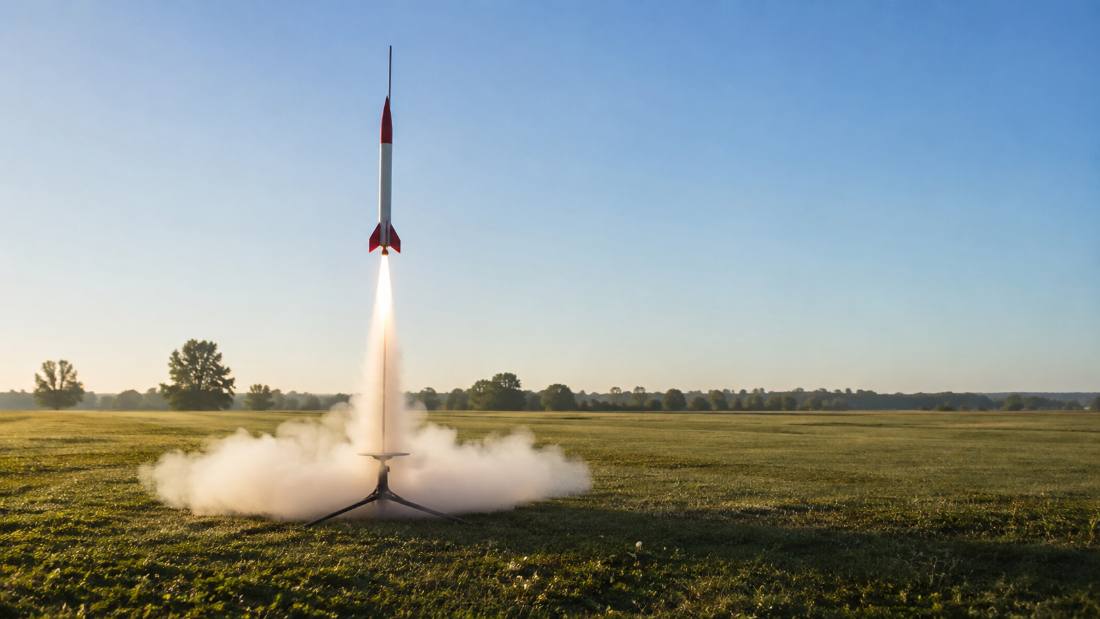
Range opens 8:30 a.m. Craftsmanship gets judged before anything flies, so arrive finished. Done by about 1:15.
On the troop calendar. Nov 16 currently carries Cooking or Camping in the troop meeting plan, and Nov 23 is already scheduled as a short gratitude-and-catch-up night. Space Exploration takes the merit badge block on both; the rank-focused first 30 minutes and last 15 stay exactly as written. Nov 23 is the natural debrief slot precisely because it was already meant to be a light night. Confirm both swaps with whoever owns the troop calendar.
Two things drive this schedule and neither is the teaching: parts have to ship, and a launch site has to say yes. Everything flagged red has to happen in August.
Place the troop order (pad, controller, altimeter, spare kits, spare motors, wadding). This has to ship before Aug 31 so Meeting 1 can show real hardware.
Open the launch-site conversation: Central Coast Model Rocket Club / NAR contact, then Camp San Luis Obispo range access. Ask what insurance certificate they need and who it must name. The Thanksgiving-weekend date gives you slack you did not have before — use it, do not spend it.
Send the guest-speaker asks for the Nov 23 debrief slot. Cal Poly CubeSat Lab and CPSS both need ~4–6 weeks; Vandenberg Public Affairs needs 6–8. Nov 23 is the only night with real slack, and by then the Scouts have flown a rocket and will ask far better questions. Nothing on that night depends on the speaker, so a cancellation costs nothing.
Confirm the launch site. Measure the smallest clear dimension yourself — you need 400 ft for the C6-5 flights — and get written confirmation that no aircraft are scheduled that day.
Meeting 1 — Why We Go. Reqs 1a–d covered live. Req 2 and req 8 assigned. Flight-readiness gate published.
Place the kit order — one Cosmic Cargo + B6-4 pack + C6-5 pack per Scout, plus two or three spare sets. It has to be in hand by Sep 28, which is handout night.
Meeting 2 — How Rockets Work. Reqs 3(a–i) and 4a–d covered live. Trading cards due. Competition rules published.
Meeting 3 — Missions and Bases. Reqs 5 and 6 covered live, then the sample-return cards (5c) and the base-design charrette (req 7).
Meeting 4 — Mission Control and Flight Readiness Review. Every rocket inspected, every prediction sealed, every Scout passes the safety readback. Anyone who fails inspection has five days to fix it.
LAUNCH DAY. Req 3 completed, altimeters read out, Prediction Cup scored. Backup Sat Nov 28, second backup Sat Dec 5.
Meeting 5 — Post-flight debrief. Predicted vs measured, anomaly write-ups, awards, and badge sign-off with the paperwork on a table. Thanksgiving week was already a light night in the troop plan, which is exactly why this fits.
Each block is 45 minutes, 0:30–1:15, slotted into the existing troop meeting so the opening and closing stay where they are. Every night is collapsed — open the one you're running this week.
Objective. Cover requirement 1 completely, hand out requirement 2 and requirement 8, and publish the flight-readiness gate.
| Time | What happens | Who |
|---|---|---|
| 0:30–0:33 | Stand-up hook: 'name one thing in this room that exists because somebody went to space.' Three answers, no corrections yet. | Counselor |
| 0:33–0:36 | Frame the four reasons on the whiteboard: HISTORY / KNOWLEDGE / BENEFITS / COOPERATION. | Counselor |
| 0:36–0:42 | History clip (stop at 3:30) + immediate goals. | Counselor |
| 0:42–0:50 | Two benefit shorts + the myth-vs-reality slide. Highest-energy part of the night. | Counselor |
| 0:50–0:55 | International cooperation clip + ISS discussion. | Counselor |
| 0:55–1:02 | Pioneer draft. Clipboard goes around DURING this, not after. | SPL runs the clipboard |
| 1:02–1:07 | Hold up the altimeter. THIS is what measures your flight — every rocket carries one, and the number it gives you is what the Prediction Cup is scored on. | Counselor |
| 1:07–1:13 | Flight-readiness gate + permission slip + safety code printout. Kits handed out Sep 28 to whoever has cleared. | Counselor |
| 1:13–1:15 | Show the launch pad and altimeter on the table. Walk the calendar. Release on time. | Counselor |
Monday, August 31, 2026
~22 min of slides inside a 45-min block
Space Exploration Merit Badge · Night 1 of 5
Requirement 1 — the purpose of space exploration
Warm-up
Space is expensive and dangerous. Give me one honest reason a country spends money on it anyway.
There are four families of answers, and the badge wants all four: history and competition, specific scientific knowledge, benefits back on Earth, and getting along with other countries. That is literally requirement 1a through 1d.
It did not start as science. It started as a race, and the science came along for the ride.
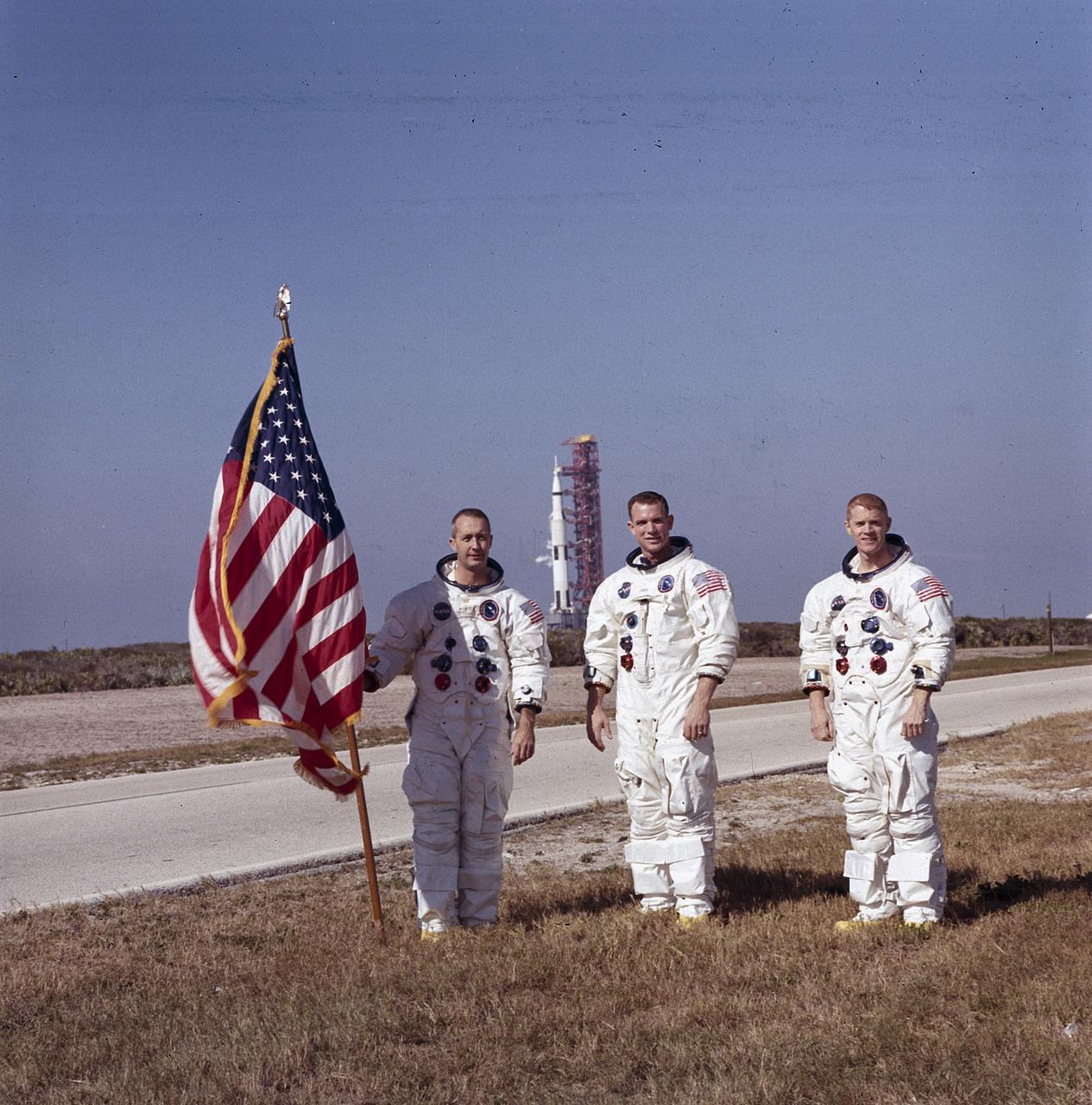
Be honest with them about the motive. Scouts find 'it was a Cold War contest and we got the science anyway' far more interesting than a tidy story about curiosity.
Not 'explore space.' Name the question the mission is built to answer.
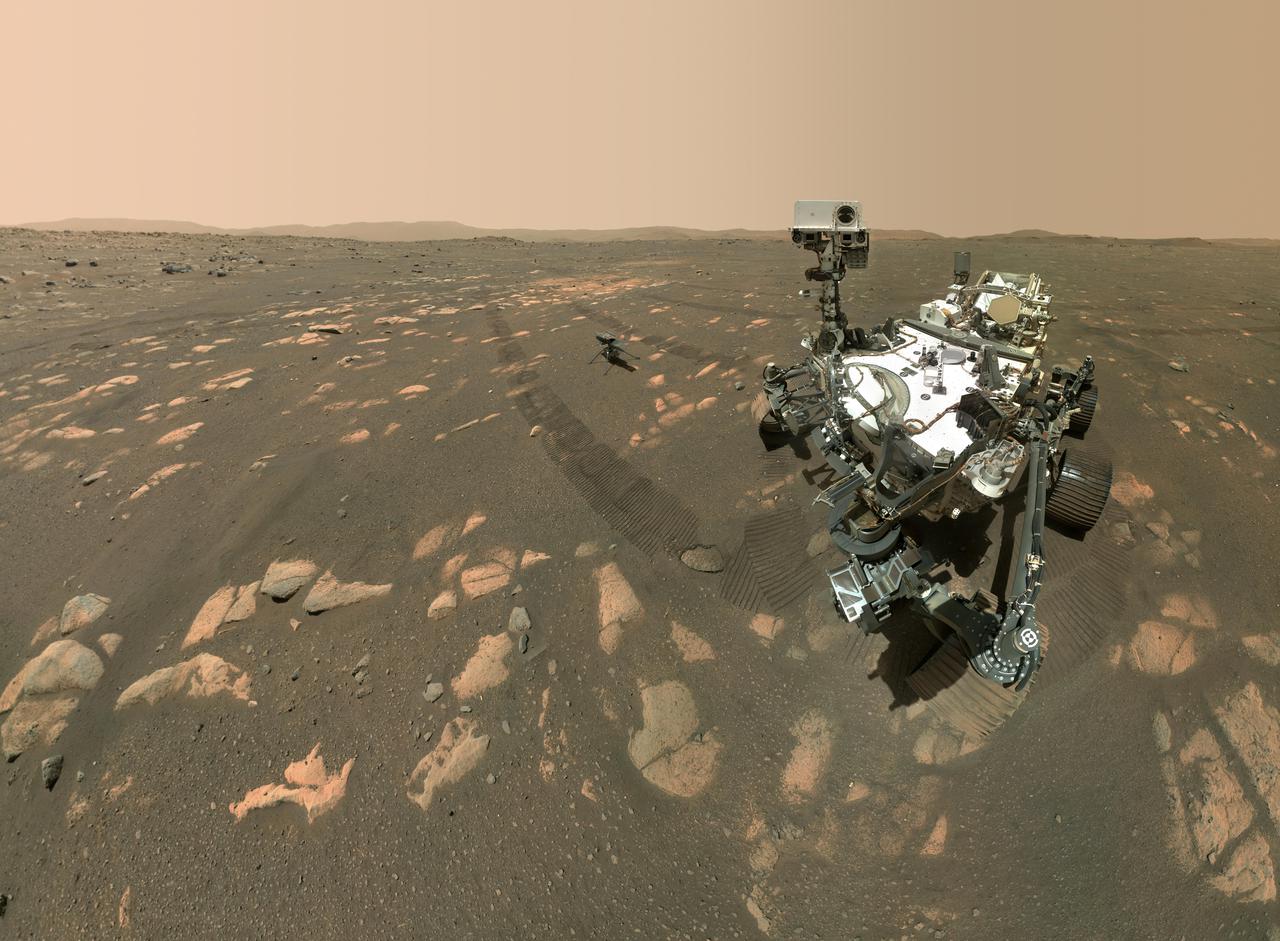
Every one of these is a question with a yes/no or a number for an answer. That is what 'immediate goal in terms of specific knowledge' means in the requirement.
Short — play it straight through, then the second one.
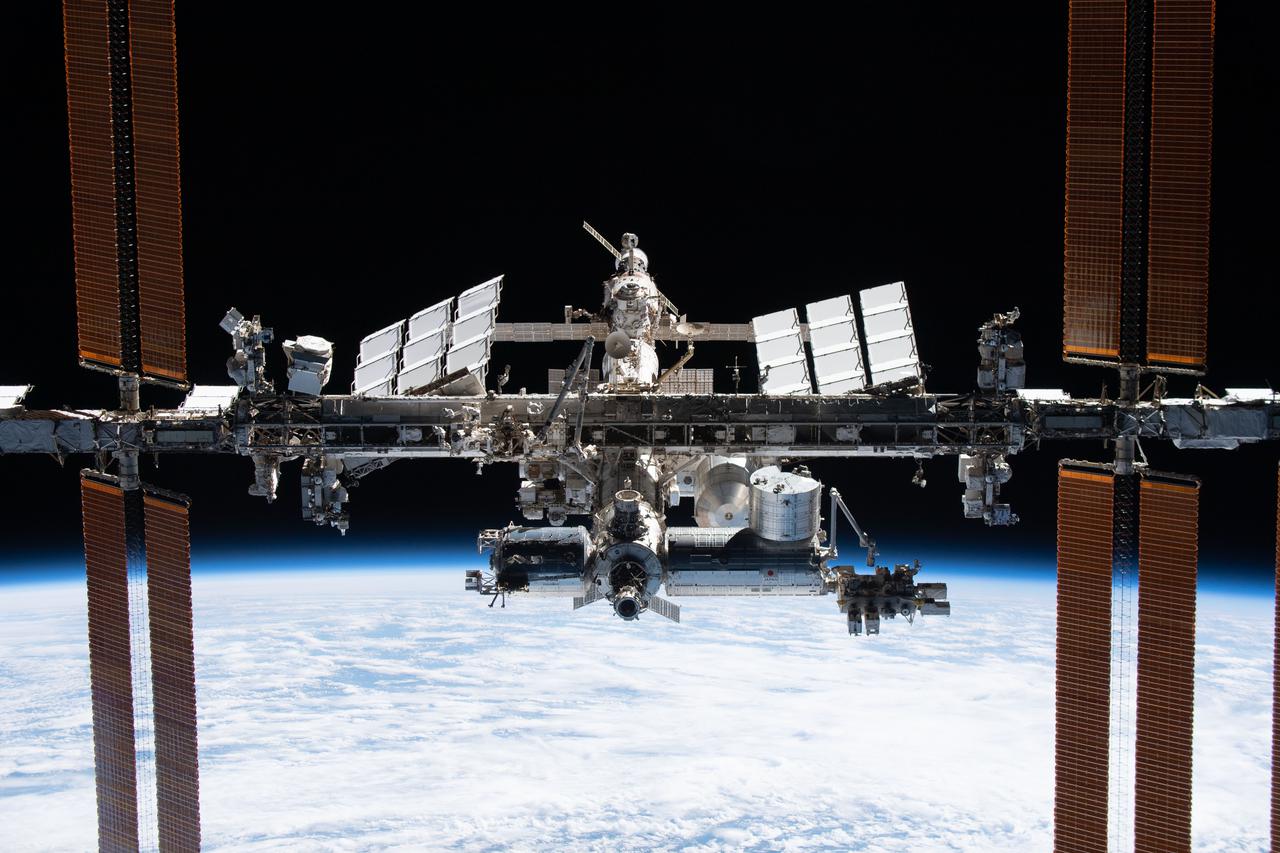
The clearest example is over your head roughly every 90 minutes.
Ask the real question: why would countries that do not get along keep flying together? The answer is not friendship. It is that the alternative is not flying at all.
This is not something I made up — it is requirement 2, written into the badge: “Design a collector’s card, with a picture on the front and information on the back, about your favorite space pioneer.” Think a baseball card, but the person on it changed spaceflight.
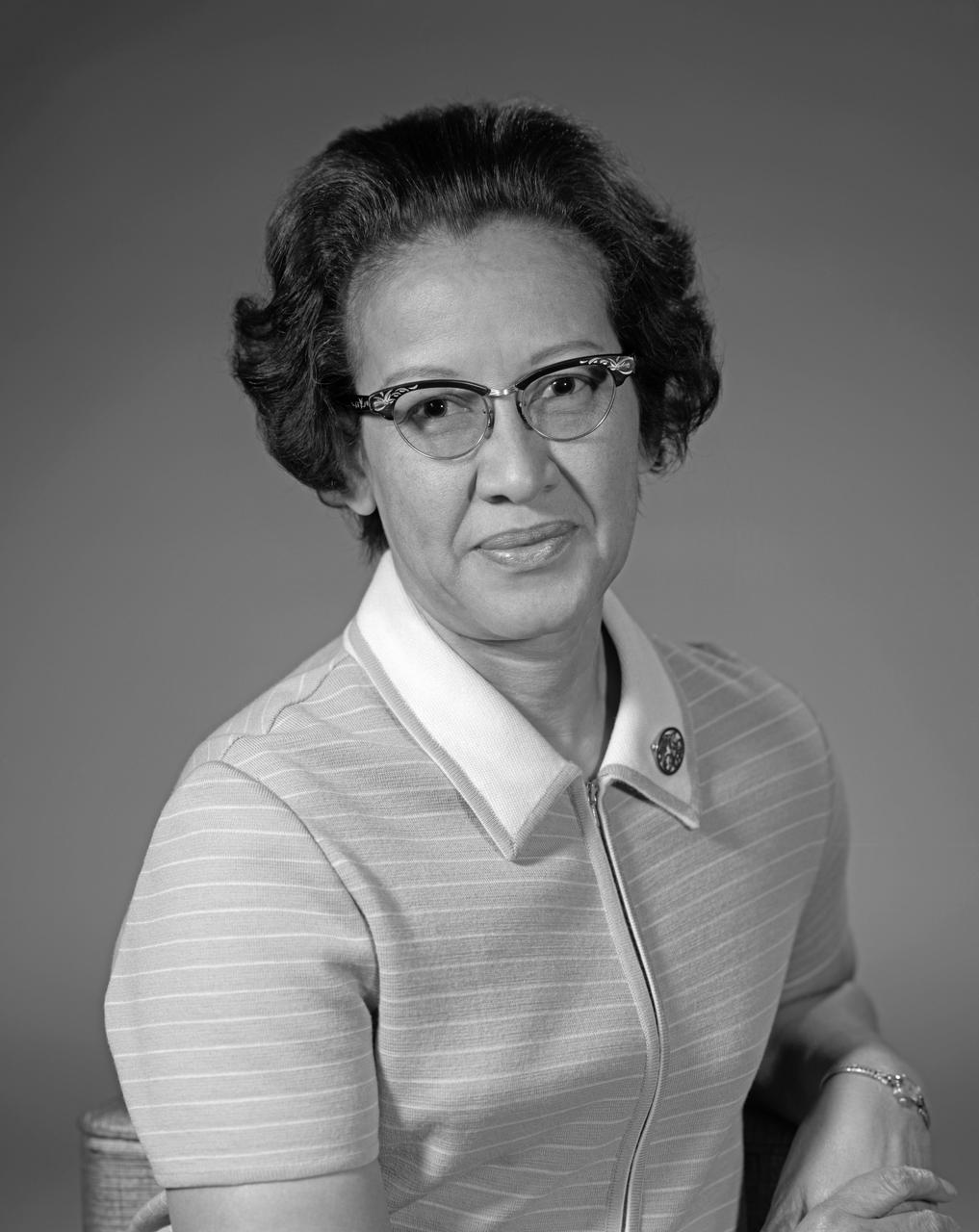
Stuck for a name? The Scout page has 26 pioneers, each with a link straight to a real biography — and the official online guide has its own twenty. Nobody has an excuse to sit there blank.
You do not get to order a rocket until you have earned it. Four things:
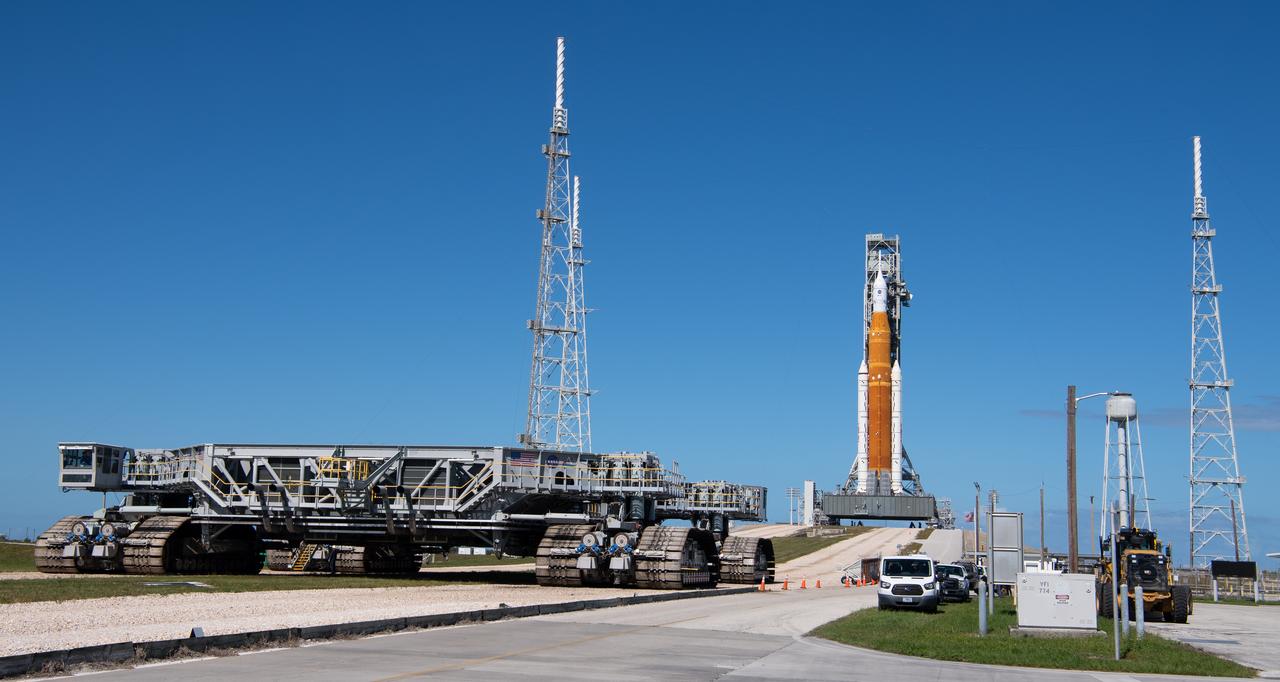
Clear all four and I hand you your kit on September 28. The troop is buying — this costs your family nothing.
Next up · Monday, September 28
Bring your pioneer card. Bring your rocket kit if it's arrived.
← → move · N notes · Esc exit
Where this night fails. Hand out the printed calendar. Five Mondays spread across three months is easy to lose track of, and a parent with the dates on the fridge is the difference between a Scout who finishes and one who drifts.
Objective. Cover requirement 3's nine parts and all of requirement 4 with hands-on demos and the simulators, collect the pioneer cards, and close the ordering gate this week.
| Time | What happens | Who |
|---|---|---|
| 0:30–0:33 | Collect pioneer cards. Check off who has ordered a kit and chase who hasn't. | SPL |
| 0:33–0:41 | Parts relay (req 3). Two patrols, nine labels, explain three each, then swap. | SPL runs it, counselor judges |
| 0:41–0:46 | Balloon-on-a-string demo + action-reaction discussion (req 4a). | Youngest Scout releases it |
| 0:46–0:52 | Motor cutaway + pass the spent motor. Decode C6-5 together (req 4b). | Counselor |
| 0:52–0:58 | Launch simulator on the projector. Predict first, then press Launch. Add payload and watch T/W fall. | Counselor |
| 0:58–1:03 | Recovery simulator as a challenge: longest time aloft without shredding the chute. | Three Scouts try |
| 1:03–1:08 | Orbit simulator (req 4c): straight up with the same fuel still comes back down. | Counselor |
| 1:08–1:13 | Mission-control diagram (req 4d). Trace the picture-to-Earth chain on the board. | Counselor |
| 1:13–1:15 | Competition rules published. Gate closes Friday. Build it at home when it arrives. Release. | Counselor |
Monday, September 28, 2026
~20 min of slides + 20 min hands-on
Space Exploration Merit Badge · Night 2 of 5
Requirements 3 (parts) and 4 (principles of space flight)
Nine parts. The requirement says identify AND explain — so for each one you owe me what it does, not just what it's called.
Nine parts, requirement 3(a) through 3(i). Tap one.
Streamlined tip that cuts drag. Friction-fit so the ejection charge can pop it off — snug, but it must pull free by hand.
Whatever the rocket is carrying that isn't needed to fly: an altimeter, a camera, a raw egg. The reason the rocket exists.
Parachute or streamer, plus shock cord and wadding. Turns a falling rocket into a landing one.
The airframe. Holds everything in line, carries flight loads, and sets the diameter that drives drag.
Small tube glued to the outside that slides over the launch rod. It keeps the rocket pointed straight until it's fast enough for the fins to work.
Move the center of pressure behind the center of gravity so the rocket weathercocks into stability instead of tumbling.
Inner tube, centering rings, and a retainer that hold the motor on the centerline and take the thrust into the airframe.
Propellant grain, nozzle, delay charge, and ejection charge in one cardboard tube. C6-5 = C impulse, 6 N thrust, 5 s delay.
Thin wire that glows hot when the controller closes the circuit, lighting the propellant. Also called a starter.
Newton's third law is the whole reason a rocket works in vacuum.
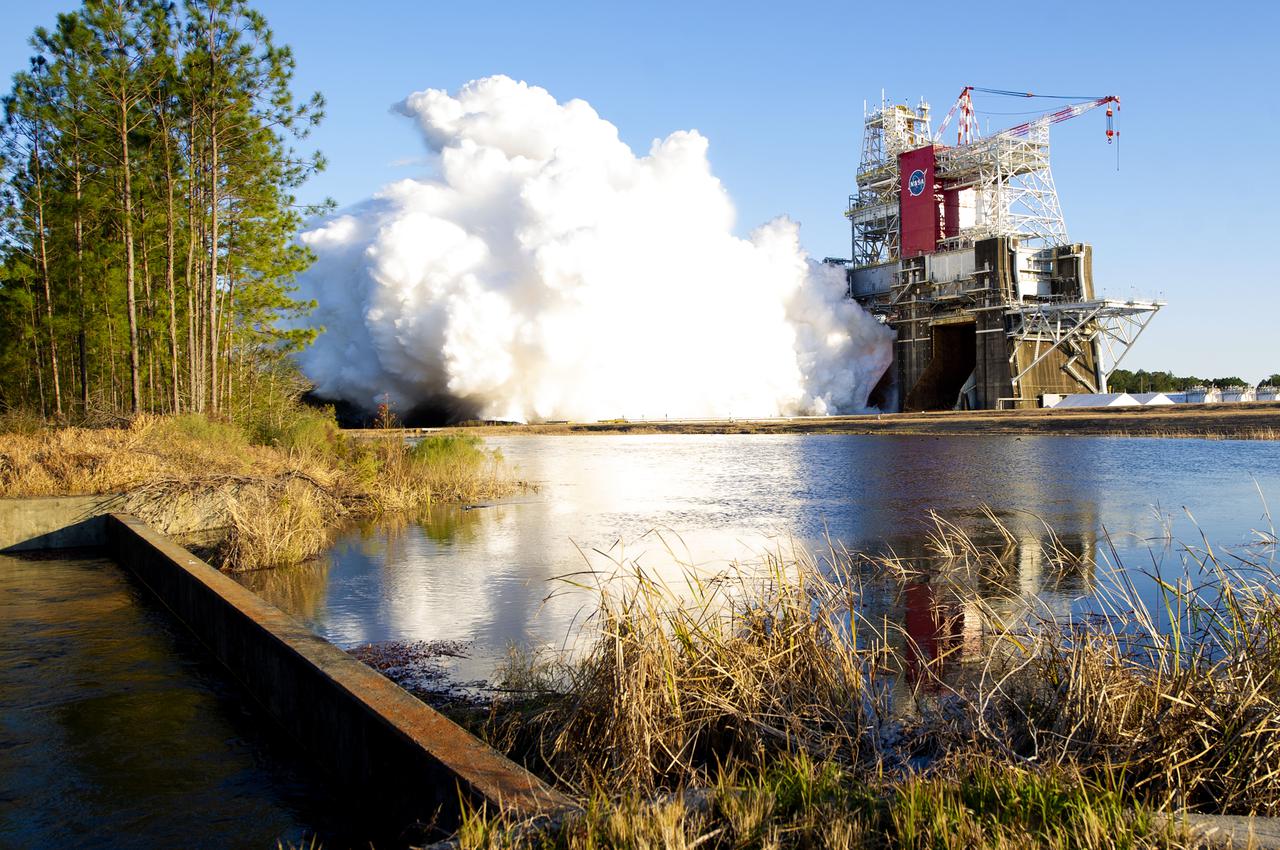
Requirement 4 says 'discuss AND demonstrate.' The balloon is the demonstration. Do not skip it to save four minutes.
Same airframe every Scout is building. Change the motor and the payload and watch what happens to thrust-to-weight — the number that decides whether it goes straight up or corkscrews off the rod.
Pick an airframe and a motor and watch the flight profile. Adding payload costs altitude twice over — more mass to lift, and less speed at burnout.
Everything an engine does comes from one sentence: throw mass backwards, hard.
A jet engine breathes air. A rocket carries its own oxidiser, which is why it works on the Moon and a jet does not.
One cardboard tube does four jobs in sequence. Tap each stage — and notice that the two numbers in the motor code are two of those four jobs.
Four things happen inside one cardboard tube. Tap a stage.
1. Ignition The igniter glows red-hot inside the nozzle and lights the propellant grain from the bottom.
2. Thrust Propellant burns, gas accelerates through the nozzle throat, and the reaction pushes the rocket up. The 6 in C6-5 is the average thrust in newtons.
3. Delay Propellant is gone. The delay grain smoulders and makes tracking smoke while the rocket coasts to apogee. The 5 in C6-5 is these seconds.
4. Ejection The ejection charge fires forward, pressurises the body tube, and pops the nose cone off so the parachute comes out.
The delay decides when the chute comes out. Drag it away from apogee in either direction and watch what happens to the rocket — and to your time aloft.
The ejection charge fires when the delay grain burns through. Too early and the rocket is still fast enough to shred the parachute; too late and it is already falling.
Open the rocket calculator on the merit badge site, pick your airframe and motor, and write down your predicted apogee. That number goes on your competition card and you cannot change it after launch day starts.
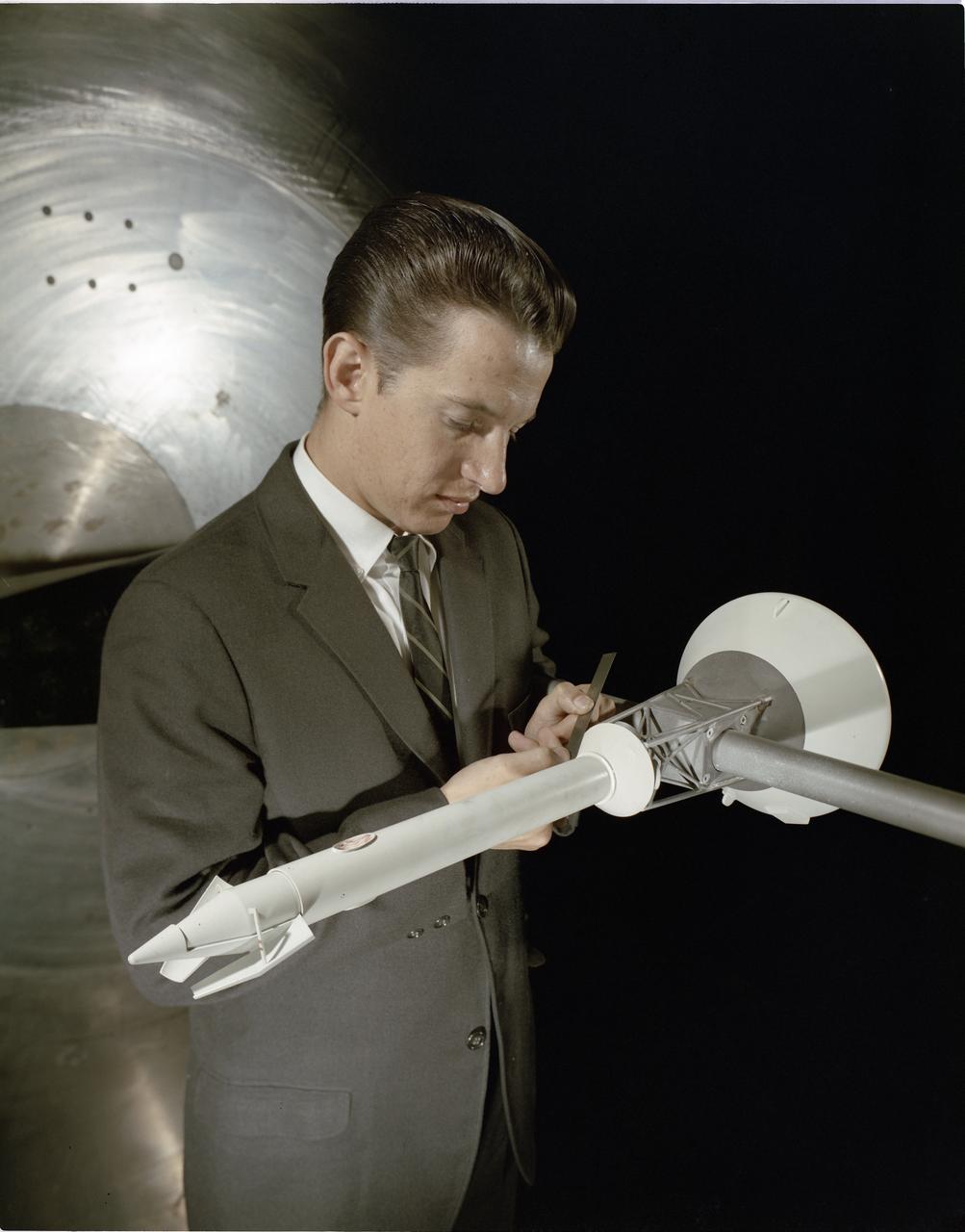
Play through, ~4 min.
Launch it yourself. Straight up and it falls straight back, no matter how much fuel you burn. The only thing that puts you in orbit is horizontal speed — about 7.8 km/s.
Orbit is not about height, it is about sideways speed. Go straight up and you fall straight back. The trick is turning that climb into a horizontal velocity of about 7.8 km/s before the fuel runs out.
Earth radius 6,371 km, μ = 398,600 km³/s². Thrust is modelled as a constant 30 m/s² along a simple gravity-turn program — real rockets throttle and stage.
A camera on Mars is useless without the other five-sixths of the system. Tap any step: the top row is our rocket, and the same step on a planetary mission is underneath.
Six steps get a number from a rocket to a laptop — and the same six get a photograph from Mars. Tap one.
← → move · N notes · Esc exit
Where this night fails. Building moved home to save meeting time, which means nobody is watching the fin alignment. Push the printed instructions hard, tell them to dry-fit before glue, and make the November 16 help desk sound genuinely welcoming rather than a last resort.
Objective. Cover requirements 5, 6 and 7 — the robotic-vs-crewed argument, one vehicle in detail, and a patrol base design.
| Time | What happens | Who |
|---|---|---|
| 0:30–0:33 | Requirement 5 options. Steer most Scouts to 5a + 5c. | Counselor |
| 0:33–0:40 | Voyager clip and Apollo clip. Discovery, importance, what we learned. | Counselor |
| 0:40–0:44 | Orbit-to-Moon simulator: aim at where the Moon will be, not where it is. | Counselor |
| 0:44–0:49 | THE ARGUMENT — robotic vs crewed. Show of hands, two Scouts defend opposite sides. | Scouts |
| 0:49–0:54 | Shuttle or ISS (req 6). Each Scout owes purpose + operation + components. | Counselor |
| 0:54–0:59 | SAMPLE RETURN CARDS (5c). Every Scout fills in their own. Six boxes, silent, timed. | Scouts |
| 0:59–1:01 | Moon base video. Cut it the second they start having ideas. | Counselor |
| 1:01–1:11 | Base design charrette (req 7) on butcher paper. Visible timer. | Patrols |
| 1:11–1:15 | Three-minute pitches, then the build reminder for November 16. | Patrols |
Monday, October 26, 2026
~30 min of slides + discussion in a 45-min block
Space Exploration Merit Badge · Night 3 of 5
Requirements 5 and 6 — robotic vs crewed, and one vehicle in real detail
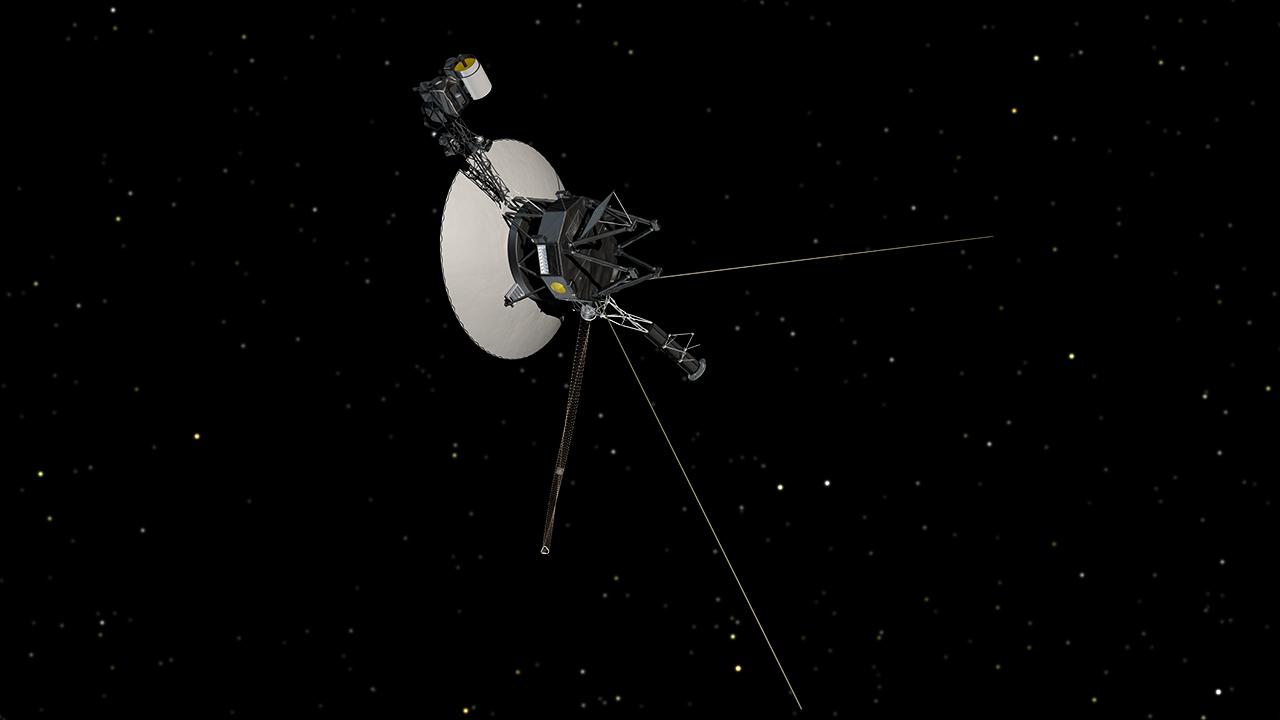
You only have to do two of these three. Most Scouts should take 5a and 5c.
5a we do tonight, out loud, as a group. 5c you do on your own card, later tonight — it is a separate requirement from the base, and it is a robot, not a place people live.
Play 2–3 min of the vintage footage.
Backup Modern robotic alternative — great animation — How does a Mars Rover work? (Perseverance) (Jared Owen) ↗
Play 3–4 min.
Backup Modern crewed alternative — "Let's light this candle." — NASA SpaceX Crew Dragon Launch (C-SPAN) ↗
You are in a 300 km orbit. One burn stretches that circle out to the Moon — but the Moon is moving at a kilometre a second, so you have to aim at where it will be in three days, not where it is now.
You are already in a 300 km circular orbit. One burn at the right moment stretches that circle until its far end reaches the Moon — and the Moon has to arrive at the same place at the same time.
Earth and Moon gravity both integrated. Moon at 384,400 km on a circular 27.3-day orbit. A real mission also has to plan the return.
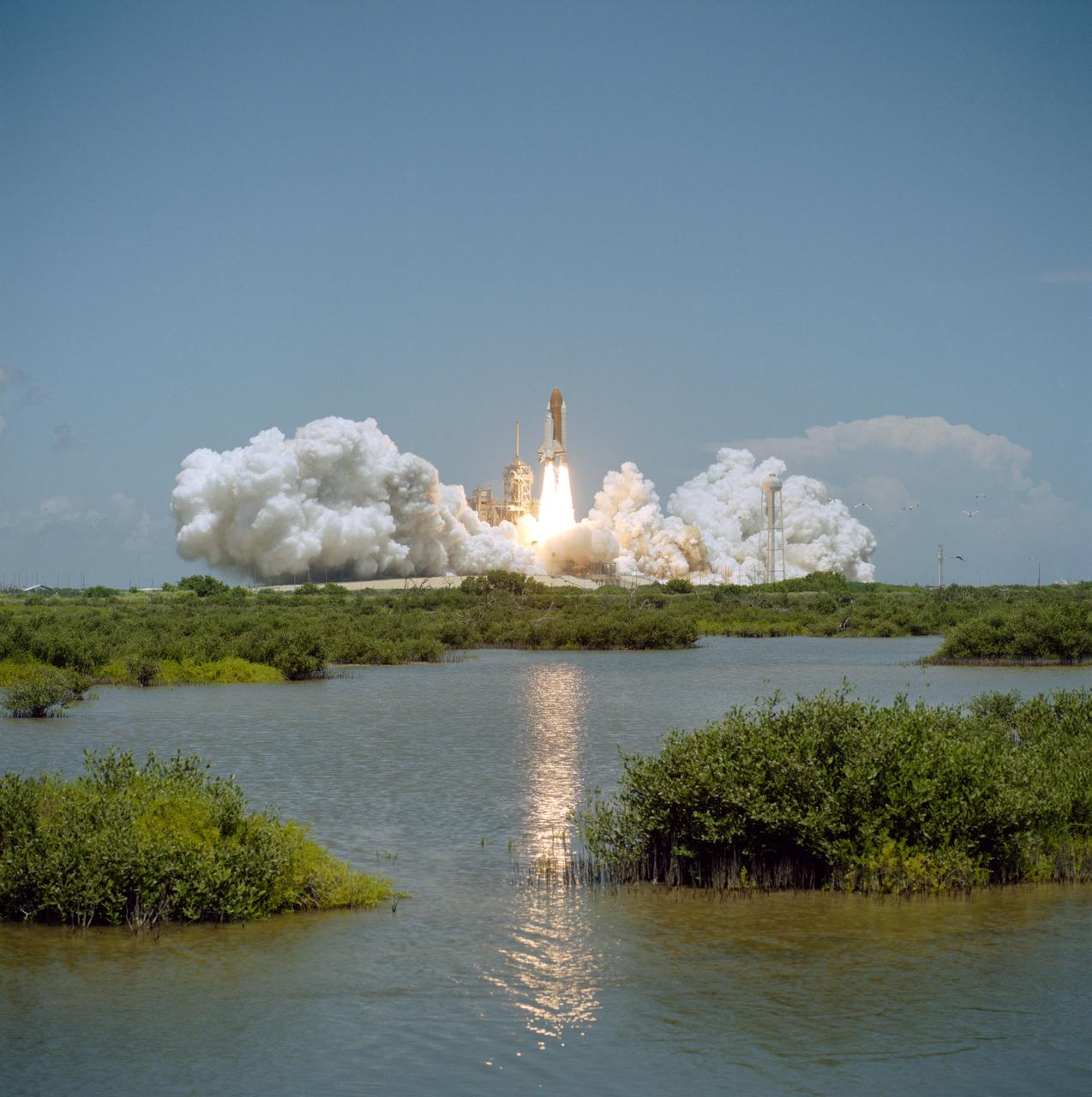
Clip only — 4 min from the launch-sequence section. Do not start it at 0:00 and hope.
Backup If you'd rather do ISS — see Spot the Station in the resources — How does the Soyuz Launch work? (and Reentry) (Jared Owen) ↗
The argument worth having
We could send ten robots to Mars for the price of one crewed landing. So why send people at all?
There is no clean answer and Scouts should leave knowing that. Robots: cheap, patient, expendable, no lunch, decades of operation, no ride home needed. People: expensive, fragile, slow — and unmatched at improvising when something breaks in a way nobody planned for. Apollo 13 is the argument for people. Voyager is the argument against.
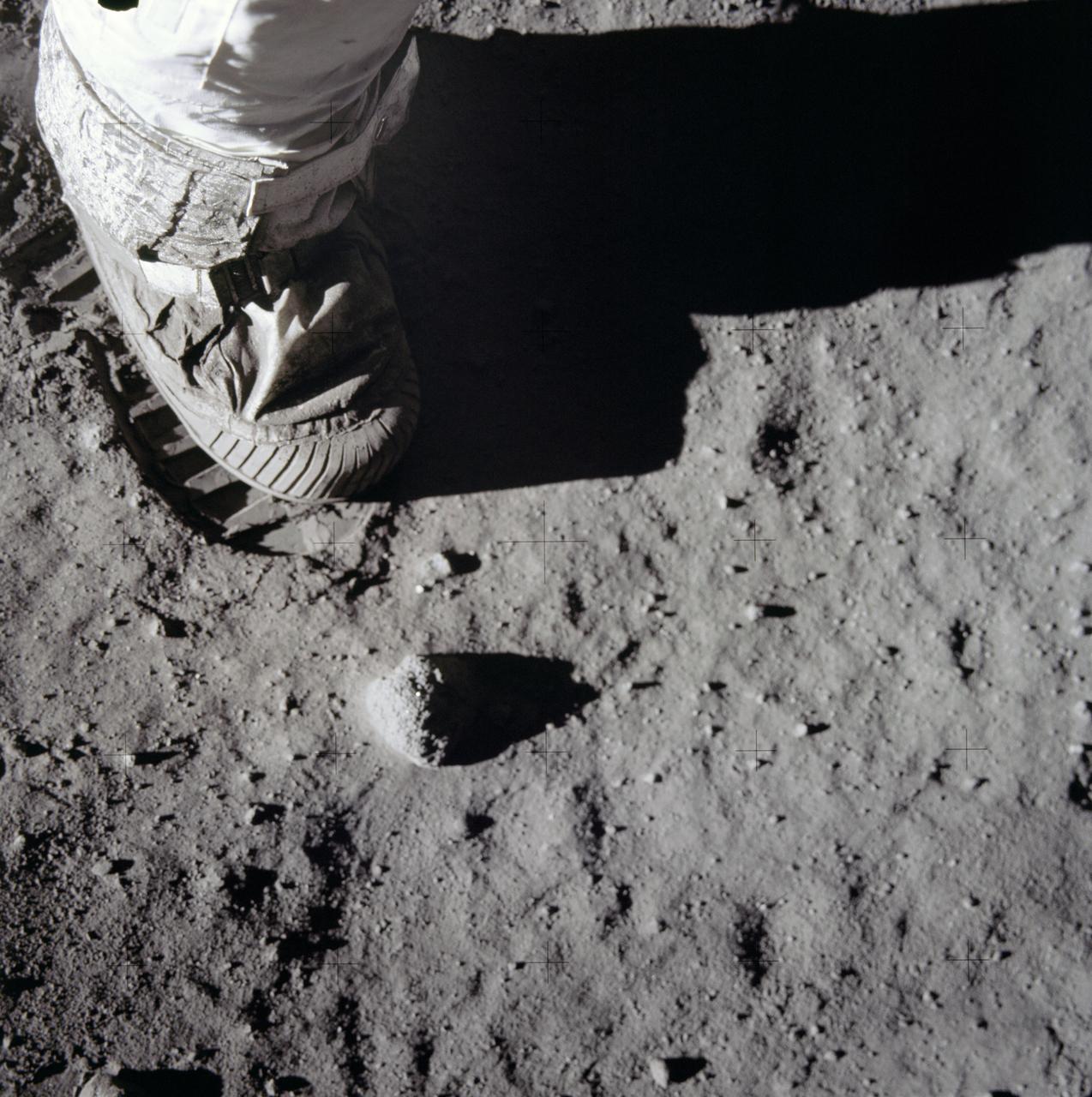
Twelve people have stood on another world. Nobody has ever stayed. Your patrol is going to design the place that lets them stay.
That bootprint is still there. No wind, no rain, nothing to erase it.
Six boxes, five minutes, your own card. A robot that goes somewhere, picks something up, and brings it home. This is NOT the base you design in a minute — that one has people in it. This one is a round trip with nobody aboard.
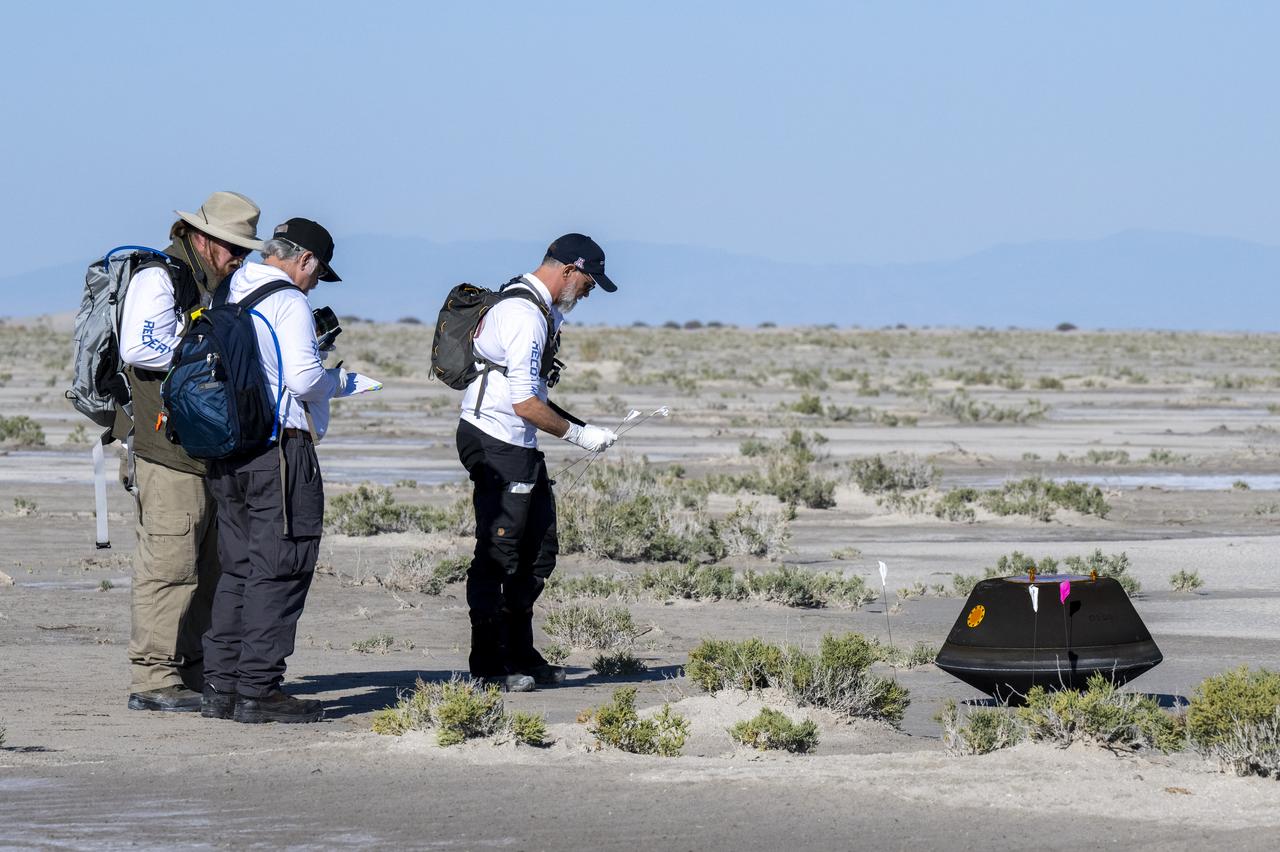
Patrols pick a location, then design a base and sell it in three minutes. Requirement 7 needs a drawing or model plus a plan for energy, construction, life support, and purpose. With a speaker: 15 minutes of design. Without: 30 minutes, and the drawings get genuinely good.
← → move · N notes · Esc exit
Where this night fails. This is the fullest night of the five, and it now carries two separate design requirements — 5c on cards and 7 on butcher paper. If you are behind at 0:54, cut the Moon-base video and shorten the charrette to eight minutes; do NOT cut the sample-return cards, because 5c has no other home and a card is faster to finish than a base drawing. If a Scout does not finish their card, they take it home and bring it to November 16.
Objective. Assign the range crew and rehearse the countdown, inspect every rocket, seal every prediction, and run the build help desk for anyone who needs it.
| Time | What happens | Who |
|---|---|---|
| 0:30–0:34 | Frame it as a real Flight Readiness Review. Go / no-go, and what no-go means. | Counselor |
| 0:34–0:44 | Mission control: assign the eight range positions by name, then run the countdown clock at 10× with call-and-response. | Everyone |
| 0:44–0:58 | Rocket inspections against the GO/NO-GO standard. Build help desk runs in parallel at a side table. | Counselor + station lead |
| 0:58–1:06 | Prediction sealing. Simulator with their real measured mass, written, initialled, into the envelope. | Scouts |
| 1:06–1:11 | Safety readback on your feet. Three random rules each, thirty seconds per Scout. | Everyone |
| 1:11–1:15 | Permission slips counted against the roster. Weather call plan, packing list, range opens 8:30. | Counselor |
A speaker needs 20–30 minutes and this block is 45, so something has to give. Move the countdown rehearsal to the first 15 minutes of launch day itself — it works there, just with more wind. Never cut the inspections or the safety readback.
| Time | What happens | Who |
|---|---|---|
| 0:30–0:32 | Scout introduces the guest. Practised, 30 seconds. | Introducer |
| 0:32–0:56 | Guest speaker + Q&A. Three primed questioners go first so the silence never happens. | Guest |
| 0:56–1:08 | Rocket inspections and the build help desk, running together. | Counselor |
| 1:08–1:13 | Prediction sealing. | Scouts |
| 1:13–1:15 | Permission slips, packing list, and crew positions handed out on paper to read before Saturday. | Counselor |
Monday, November 16, 2026
~15 min of slides, 30 min of crew assignments, inspections and predictions
Space Exploration Merit Badge · Night 4 of 5
Take a station, learn the calls, pass flight readiness. Five days to launch.
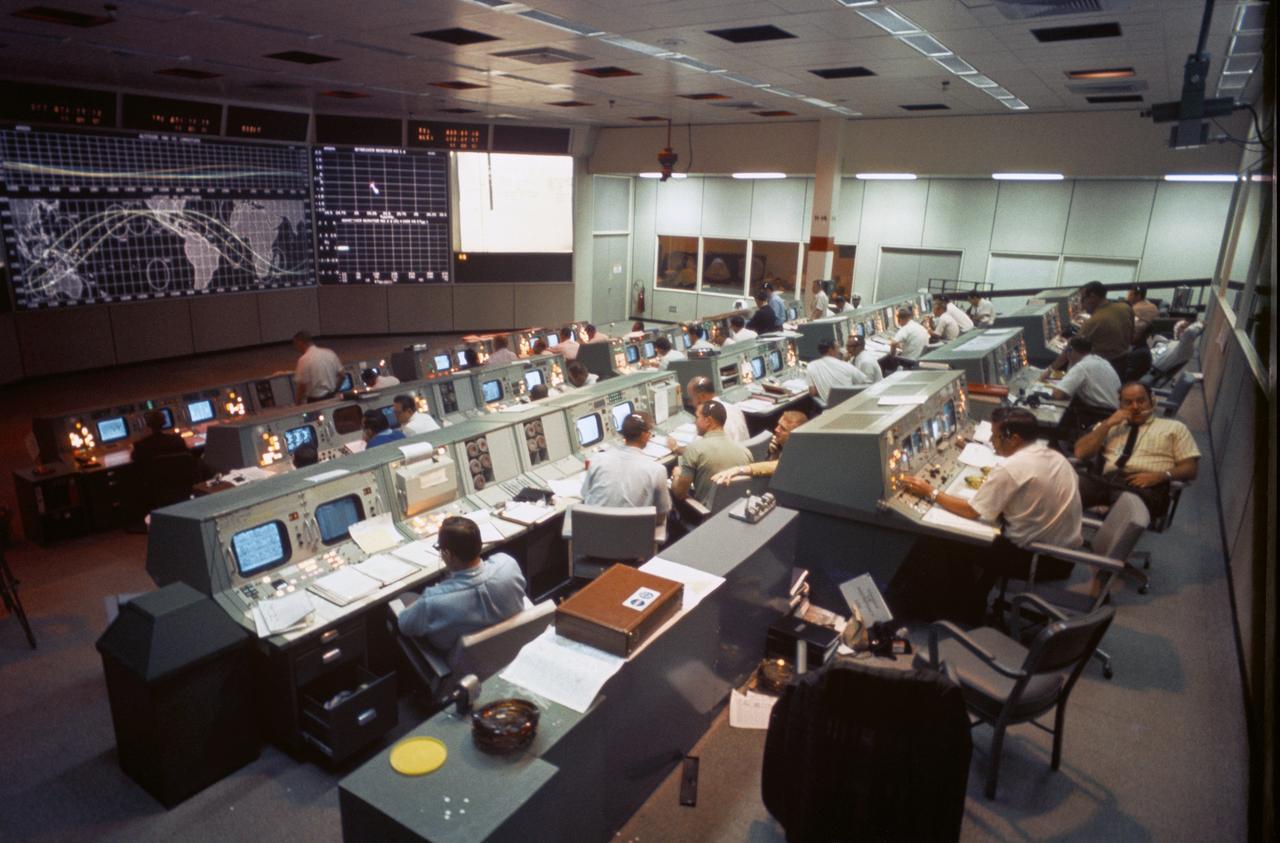
Eight positions, real callsigns, and a countdown that nobody gets to skip. Pick your station tonight and practise the calls, because on Saturday the count runs for real.
Eight positions. At 6–10 Scouts everybody has one, and they rotate every flight so nobody spends the morning holding a clipboard. Callsigns are used on the range and nowhere else — that is exactly what makes them work.
Counselor, or a Life/Eagle Scout who has done this before
Runs the countdown, polls the room, and is the only voice that can say launch or scrub. Everyone else reports to Flight.
Holds: The countdown card and the launch key.
A registered adult — always an adult, no exceptions
Inspects every rocket before it goes to the pad, owns the safety perimeter, and can stop a countdown at any point without giving a reason.
Holds: The inspection cards and a whistle.
Older Scout
Loads the rocket, connects the igniter clips, confirms continuity, and calls the pad clear. Last person to step back from the rail.
Holds: The launch controller and the safety key.
Any Scout
Reads wind speed and direction before every flight, watches for the gust that arrives during the count, and calls the wind hold.
Holds: Wind meter or a ribbon on a stick, and the wind log.
Any Scout — rotates each flight
Confirms the altimeter is armed and in the payload bay before the rocket goes on the rod, then reads it out after recovery and writes the number on the board next to that Scout's prediction. Nothing gets scored until DATA has called it.
Holds: The altimeter log board and a pen that works.
Two Scouts, one with binoculars
Tracks the rocket through the whole flight, calls the landing bearing, and leads the walk-out. Nobody moves downrange until Recovery is released by Flight.
Holds: Binoculars and the recovery log.
Two adults, timing independently
Starts on liftoff, stops on touchdown. The two times are averaged — that average is the Time Aloft score.
Holds: Two stopwatches.
Any Scout who wants the mic
Announces each flight to the crowd — Scout's name, rocket name, motor, and predicted altitude — then reads the measured result after recovery.
Holds: The flight cards and a loud voice.
Flight calls each station by name. Each answers GO or NO-GO. One NO-GO stops the count — and any Scout may call it without having to explain first.
Poll not started.
One card per flight, filled in before the rocket leaves the table. Print a stack of them. The card is what the RSO signs, what PAO reads out, and what the score gets written on — so it is also the paper trail for requirement 3.
Print one per Scout per flight, plus spares. Two flights each means at least 20 cards for a troop of ten.
Your rocket should be built by now. If it is not, or something went wrong, this is the table to come to.
No judgement and no lecture. A Scout who turns up with an unbuilt kit and asks for help has done exactly the right thing.
A NO-GO tonight is not a failure. It is five days of warning, which is the entire reason we do this on the 16th and not on the field.
Open the altitude simulator, enter YOUR measured mass — not the box spec — pick your motor, and write the predicted apogee on your competition card. I initial it. It cannot change after tonight.
I pick three rules from the NAR Model Rocket Safety Code at random. You tell me what they are. Everybody does this.
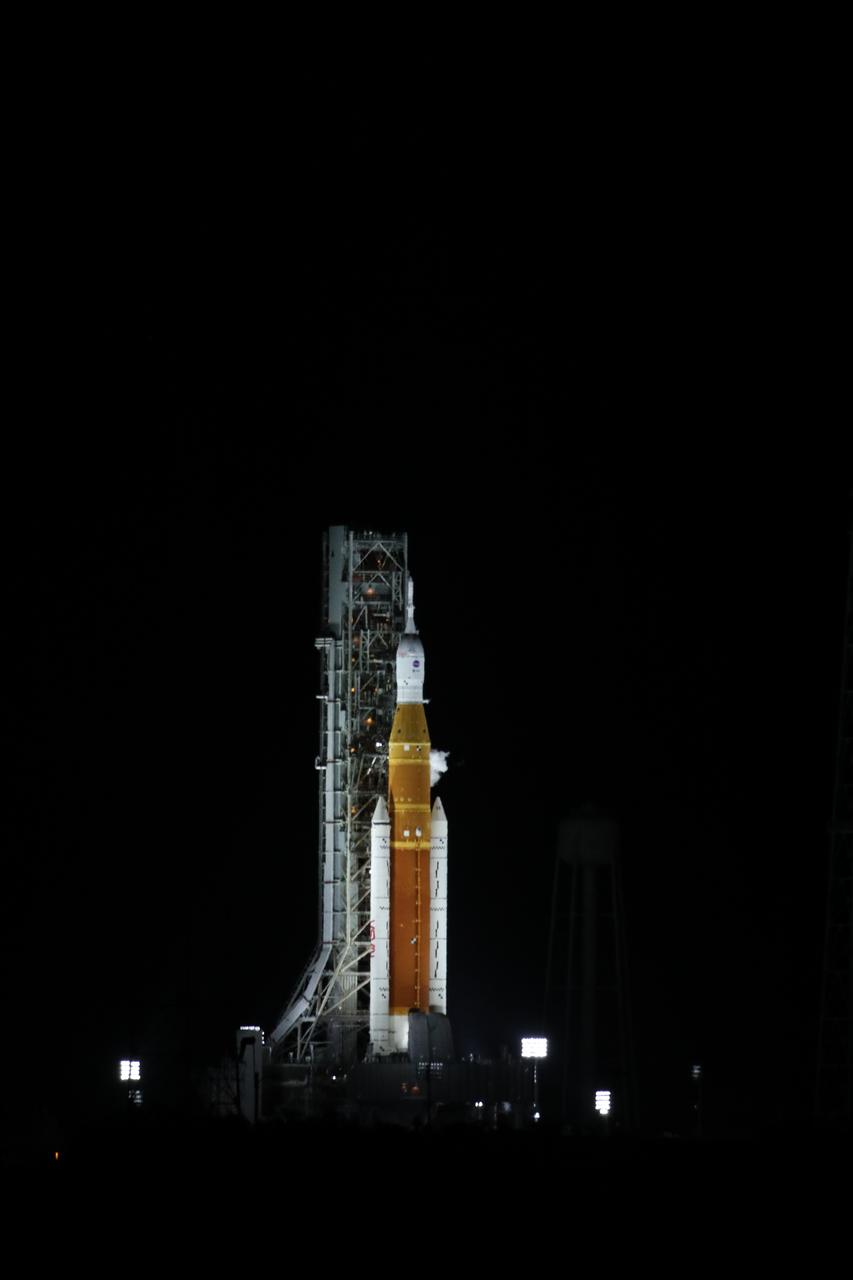
Can't answer? You get the printout and you answer me on the field Saturday before you fly. Nobody is embarrassed, and nobody flies unbriefed.
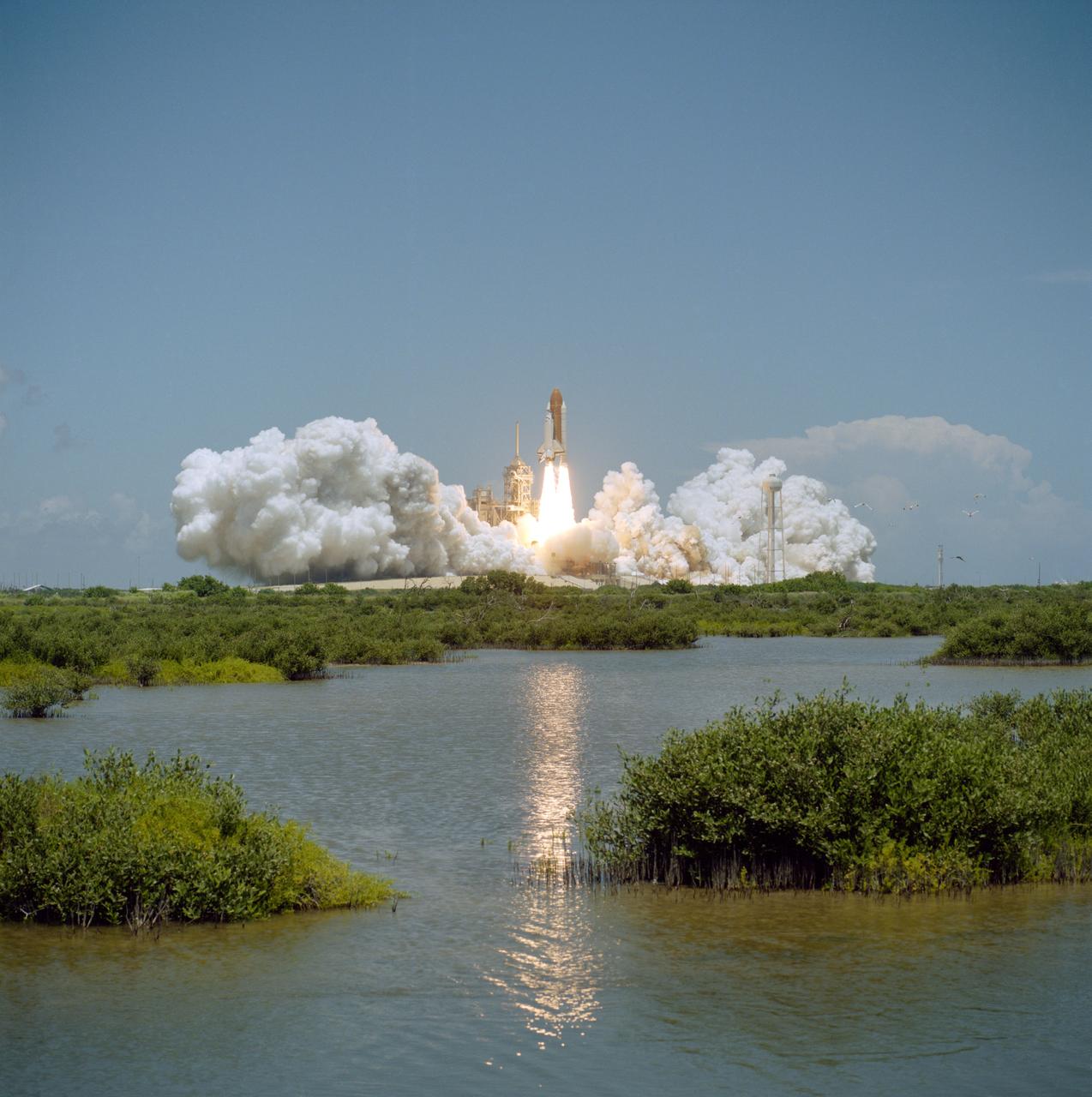
← → move · N notes · Esc exit
Where this night fails. Two things run at once tonight — inspections and the help desk — so you need a second adult or a capable older Scout. Trying to do both yourself is how the safety readback gets skipped, and that is the one item that cannot be skipped.
Objective. Analyse predicted vs measured as a group, give out the awards, and sign the blue cards before anyone leaves for Thanksgiving.
| Time | What happens | Who |
|---|---|---|
| 0:30–0:42 | Whiteboard every Scout's predicted, measured and percent error. Ask the four questions. Let them find the pattern. | Counselor + Scouts |
| 0:42–0:52 | Altimeter numbers on the projector. Every Scout's predicted vs measured, plotted together. | Counselor + Scouts |
| 0:52–0:58 | Anomaly write-ups read aloud. The Anomaly Award should get the biggest laugh and the most respect. | Scouts |
| 0:58–1:05 | Awards: Prediction Cup, Max Altitude, Time Aloft, Mission Accomplished, Recovery, Craftsmanship, Anomaly. | Counselor |
| 1:05–1:13 | Requirement 8 career conversations one-on-one while others finish write-ups. Blue cards signed at the table. | Counselor |
| 1:13–1:15 | Close. What we'd fly next, and who wants to do it again in the spring. | Counselor |
Monday, November 23, 2026
~15 min of slides + 30 min of analysis, awards, and sign-off
Space Exploration Merit Badge · Night 5 of 5
Predicted vs measured, the awards, and badge sign-off
Put every Scout's numbers on the whiteboard: predicted, measured, percent error. All of them, together.
A model that is consistently 15% high is not a broken model — it is a model with a known bias you can correct for. That sentence is most of what flight test engineering is.
Every rocket flew with the altimeter in its payload bay. Put all the numbers on the projector at once and read the room's flight as one dataset.
This same work can support a Scout who later takes up Engineering or Aviation — each of those badges has its own requirements and its own counselor sign-off, so nothing here is credit already earned. Tell the crew to keep their data and write-up.
← → move · N notes · Esc exit
Where this night fails. The most common way a merit badge dies is a counselor meaning to do the paperwork later. Pre-fill the blue cards, bring them, and sign them in the room. Thanksgiving is the perfect deadline — nobody wants a loose end going into a holiday.
Not running in Fall 2026 — parked as a future project
What replaces it. Nothing is lost from the teaching. The Estes altimeter fits the Cosmic Cargo's payload bay, flies in every Scout's own rocket, and produces the one number the whole course is built around — measured apogee against the altitude they predicted and sealed. That is the Prediction Cup intact, with real instrument data, and zero firmware between a Scout and their result.
Everything below still stands and is worth keeping for a future year — ideally as its own project with its own adult, running in parallel rather than on top of a merit badge course. If you do pick it up, the honest minimum is a second adult who owns the electronics and a field with 1,000 ft in every direction.
Running the Telemetry Rocket capstone as a group is the right call — it is much better as a crew project than as a solo one, because a real mission has a flight software person and a ground station person and they have to talk to each other. But be clear-eyed about the arithmetic before you promise it to the Scouts.
The capstone as scoped is eight 90-minute sessions plus a launch day — about 14 hours. Five 45-minute Monday blocks is 3 hours 45 minutes, and every one of those minutes is committed to requirements 1 through 8 and a flight readiness review. There is also a practical problem: firmware debugging in 45-minute chunks is miserable. Half the block goes to laptops booting and cables being found, and you stop right when the crew has momentum.
So: the badge runs on Monday nights, and the telemetry build runs as three Saturday-morning crew sessions where three uninterrupted hours actually let people finish a thought. Mondays carry short checkpoints — enough to keep the whole troop bought in and to show the crew's progress to Scouts who aren't on the build. What the extended calendar does buy the crew is better spacing: five weeks between sessions 2 and 3, and session 3 landing exactly one week before launch instead of the night before.
| Role | Size | Owns | Build stages | Also earns |
|---|---|---|---|---|
| Flight Software | 2 Scouts | T-Beam firmware. Read GPS and sensors, build the telemetry packet, transmit over LoRa. | Stages 1–3 of the six-stage build | AI 6, AI 7a, Programming 5a |
| Ground Station | 2 Scouts | Heltec receiver firmware and the laptop side. Parse packets, log clean CSV, don't drop data. | Stages 4–5 | AI 6, Programming 5b |
| Payload Integration | 2 Scouts | The sled, the battery, the mounting, the mass and CG budget. Makes the electronics survive 15 g and land intact. | Runs parallel to 1–5 | Engineering 3, Engineering 5 |
| Mission Ops & Data | 2–4 Scouts | Prediction sheet, flight cards, range calls on launch day, and the post-flight analysis that compares predicted to measured. | Stage 6 | Engineering 4, Aviation 1e, Aviation 1h |
Rotate one Scout between Flight Software and Ground Station halfway through. The bug that teaches the most is always at the interface between the two — the packet one side sends and the other side can't parse. Manufacture that moment on purpose.
Gotcha. Budget half this session for laptop and driver problems. It is always the drivers. Have two known-good USB-C cables — data cables, not charge-only.
Gotcha. The interface bug will happen here. Let it. Then have the two crews debug it together at the whiteboard instead of fixing it for them.
Gotcha. GPS lock takes minutes from cold, outdoors, with sky view. Practice the countdown with a real lock time or you'll be standing at the pad watching a blinking LED with ten Scouts waiting.
Because it's a group project, the crew roles do double duty: the same build satisfies the Artificial Intelligence badge's project requirement, gives Programming a two-environment req 5, feeds Engineering a full design cycle, and hands Aviation real flight data. Scouts on the crew should know that going in — it changes how seriously they keep their prompt logs and their notebooks.
Honest risk. The most likely failure mode is not the code. It is that three Saturdays in the fall compete with soccer, band, and campouts, and the crew shows up half-strength. Fix it by naming a primary and a backup for every role at session 1, and by making the bench unit available to take home between sessions.
One page per requirement, written by Scouting America, free, and updated when the requirements are. Each page carries the requirement text verbatim, a few hundred words of plain explanation, embedded videos, and links out to NASA. For the newest badges it explicitly replaces the pamphlet — no purchase needed.
Should you just scroll through it in the meeting? Scrolling through it live would be a bad 45 minutes — it is prose, it is linear, and reading a website aloud is the opposite of the night you have built. Assign it as the reading, keep the room for the doing.
Every requirement page, if you want to open one on the projector to settle a question mid-meeting:
Print one per Scout for October 26. Requirement 5c is a robotic round trip and it is not the inhabited base — the base is requirement 7. Keeping them separate is what makes both of them hold up, and this card is the individual evidence for 5c.
Requirement 5c · one per Scout
Design a robot that goes somewhere, picks something up, and brings it back. Six boxes. Fill in your own card even if you talk it through with your patrol — the requirement is yours, not the table's.
Name it. Not “a moon” — Europa, Enceladus, Bennu, Phobos, comet 67P. The requirement asks you to name the planet, moon, comet or asteroid, so the whole card hangs on this box.
Watch out. “Mars” on its own is thin. “Jezero Crater on Mars” tells me you know why you picked it.
Rock core, surface dust, ice, a gas sample, or something from under the surface. Then the harder half: what question does having it on Earth answer that a camera out there could not?
Watch out. If a robot could have just photographed it, you have not justified the trip home.
Drill, scoop, sticky pad, a shot fired into the surface, a robot arm. Match the tool to the surface — you cannot drill a comet the way you drill basalt.
Watch out. Low gravity fights you. Push down on an asteroid and you push yourself away from it.
This is the box the requirement actually grades. Pick the two conditions that would kill it — temperature, radiation, dust, pressure, acid, vacuum, distance from the Sun — and say what you did about each one.
Watch out. “It has shielding” is not an answer. Shielding against what, and why that much?
You need a second rocket, and it has been sitting in the cold since launch. How big is it, what does it burn, and how does it survive the wait?
Watch out. Most people forget this box entirely. Getting down is the easy half.
Cruise time, then entry. How fast are you coming in, what stops you, and how do you keep the sample cold and uncontaminated all the way to the lab?
Watch out. If it lands at 200 mph the mission failed, however good the rest was.
Not the same as the base. The base you design later tonight is requirement 7 — somewhere people live. This is requirement 5c — a robot on a round trip, with nobody aboard. Same kind of thinking, completely different vehicle, and they are two separate requirements.
The patrol charrette stays exactly as it is — arguing about a base is how the good ideas turn up. But requirement 7 asks each Scout for drawings of their base, so each Scout gets their own sheet and owns one of the four subsystems out loud during the pitch.
Requirement 7 · one per Scout
Design with your patrol, argue with your patrol, pitch with your patrol — but this sheet is yours. Your own drawing, your own four boxes. You can share a concept with the table; you cannot share the requirement.
Where is it? Name the world and the spot on it — and say what made you pick there.
How much power, from what, and what happens when the sun goes down?
Solar is the easy answer. The follow-up that makes it real: a lunar night is 14 Earth days long. Now what?
Shipped whole, inflated on arrival, 3D-printed from local dirt, or dug in?
Everything you ship costs a fortune per kilogram. Everything you make there costs you a machine that has to work first time.
Air, water, food, waste, radiation. What is recycled, and what runs out?
Name what fails first. Every honest base design has an answer to that, and it is usually not the thing people draw.
Why does this base exist, and who is paying for it?
The hardest question in the whole requirement: what does this base do that a robot could not do cheaper?
Counselor: during the three-minute pitches, each Scout speaks to the subsystem they own. That is the moment requirement 7 actually gets met for that individual — not when the patrol's butcher paper goes up on the wall.
Everything that goes out on paper, in one place. The first two are per-Scout; the tracker is yours.
All eight requirements with a tick box and an initials/date line for each. This is the Scout's record and your audit trail.
26 pioneers with a one-line story and a card angle each, grouped by category, with MY CARD and DISCUSS boxes. Hand it out at Meeting 1 with the sign-up clipboard.
Requirement 2's card, front and back, with cut lines. Front is a blank picture box; the back carries the information and the four other pioneers. Letter size.
One row per Scout, one column per requirement. This is the sheet the checkout prompts below feed into.
The pioneer list and the collector's-card template are also on the Scout side as fillable versions that save in the browser — same 26 people, same numbering as the paper.
Print one per Scout at Meeting 1 and have them bring it every week. This is their record and your audit trail — it pairs with the checkout prompts below, which are what you ask before you initial a box. A print-ready PDF ↓ is available if you would rather not print from the browser.
The single biggest way a group merit badge goes wrong is that the room did the requirement and nobody checked who actually did it. This is the sheet that prevents that.
Group instruction is fine. Group credit is not. The Guide to Advancement asks the counselor to be satisfied that each Scout personally completed each requirement, and requirement 4 in particular uses the words discuss and demonstrate — which one Scout cannot do on behalf of the patrol. These are the 45-to-90-second prompts that turn a room activity into an individual sign-off. Work the room while they build, simulate and draw; do not stop the meeting to do these.
| Req | When | What you ask them to do | What clears it | Time |
|---|---|---|---|---|
| 1a–d | Meeting 1 · Aug 31 | Tell The purpose of space exploration “Give me one historical reason we went, one thing we are trying to learn right now, one thing that came back down to Earth, and one country we fly with that we do not always get along with.” | Four answers, in their own words. Not a list they read off the slide. | 60 s |
| 2 | Meeting 2 · Sep 28 | Share + discuss Space pioneer card, plus four others “Show me your card and tell me why this person. Then name four other pioneers and what each one did.” | The card exists and is theirs. The other four are the ones from around the room — this is why patrols present their cards to each other. | 90 s |
| 4a | Meeting 2 · Sep 28 | Demonstrate The law of action-reaction “Let the balloon go, then tell me what pushed what. Which way did the air go, which way did the balloon go?” | They say the balloon pushes air backwards and the air pushes the balloon forwards. Both halves. | 45 s |
| 4b | Meeting 2 · Sep 28 | Demonstrate How rocket engines work “Hold the spent motor. Point at where the propellant burned, where the gas got out, what the delay does, and what the ejection charge is for. Then read me the C6-5.” | Four parts pointed to on the real object, and letter = impulse, first number = thrust, second number = delay seconds. | 90 s |
| 4c | Meeting 2 · Sep 28 | Demonstrate How satellites stay in orbit “Drive the orbit simulator yourself. Get to orbit, then tell me why straight up does not work.” | They say it out loud: orbit is sideways speed, and you are falling the whole time but moving fast enough to keep missing. | 90 s |
| 4d | Meeting 2 · Sep 28 | Demonstrate How pictures get made and transmitted “Trace it for me end to end: camera → numbers → radio → antenna on Earth → picture on a screen. Where does it get slow, and why?” | The whole chain, in order, plus light-speed delay as the reason Mars pictures take minutes. | 90 s |
| 5c | Meeting 3 · Oct 26 | Design + show Sample-return mission “Their own sample-return card, filled in and named.” | A named destination, a stated sample, and a specific answer for how the spacecraft survives that particular environment. Generic 'it has shielding' does not clear it. | Card |
| 6 | Meeting 3 · Oct 26 | Describe Crewed vehicle or the ISS “Pick one — shuttle, Dragon, Soyuz or the ISS — and give me its purpose, how it operates, and three components.” | Purpose, operation and components. All three, about one vehicle they chose. | 60 s |
| 7 | Meeting 3 · Oct 26 | Design + draw Inhabited base “Their own base sheet: a drawing plus energy, construction, life support, and purpose.” | Every Scout has their own drawing, even if the patrol shared a concept. Four boxes filled in on their own sheet. | Sheet |
| 3 | Launch day · Nov 21 | Build, launch, recover Model rocket, two flights “Their rocket, their two flights, their stated objective on the second one. Then name the nine parts on it.” | They built it, both flights happened, and they can point at all nine parts on their own airframe. | Field |
| 8 | Meeting 5 · Nov 23 | Discuss One career “Tell me about the job, the training and what it costs, the prospects and pay, what the day is actually like — and what about it interests you.” | Findings AND the interest question. The second half is part of the requirement and it is the half people skip. | 2 min |
Print this, put your roster down the side, and initial as you go. A Scout with a blank box has not finished the requirement, no matter how good the night was — and finding that out on November 23 with the paperwork on the table is far too late to fix it.
These are troop rules, not badge requirements. These are Troop 308 rules about handing out hardware and standing on a live range — not additional Space Exploration merit badge requirements. A counselor may not add to or subtract from the requirements as written (Guide to Advancement 7.0.1.4). A Scout who clears none of these still earns the badge on the requirements as written; what the gate controls is who gets a kit from the troop and who is on our range on November 21, which are budget and range-safety decisions, not advancement ones.
The troop buys the kits, so the handout is the leverage rather than the money. Four gates, all clearable in the four weeks between Meeting 1 and Meeting 2. Kits go out at Meeting 2 on September 28 to everyone who has cleared, which leaves seven weeks to build at home before the November 16 inspection. Anyone who clears late gets theirs at Meeting 3 on October 26 — after that there is not enough time and they fly a troop spare.
Attend Meeting 1, or catch up one-on-one with me on requirement 1a–d. This is the free one — it just means you're actually in the program.
Front picture, back information: who they were, what they did, why it mattered, one surprising thing. Hand-drawn scores the same as printed. Due at Meeting 2 on September 28 — the same night the kits go out, so bring it if you want to walk out with a rocket.
Ten questions straight out of the NAR Model Rocket Safety Code: materials, motors, ignition system, misfires, launch safety distance, flight conditions, recovery, and never approaching a rocket that hasn't launched. Open-book, unlimited retakes, but you pass it before I hand you a motor.
The Scout writes down their declared mission objective for launch #2, and a parent signs the launch-day permission slip. Requirement 3 says the second launch has to accomplish a specific objective; deciding it now is how it stops being an afterthought on the field. The permission slip is the ordinary troop one — no money on it, because the troop is buying the hardware.
Requirement 3 wants the second launch to accomplish a specific objective. These all produce a number:
Requirement 3 asks only that the second launch accomplish a specific objective — it does not require a measurement. Asking for a number is our house rule, because it is what makes the Prediction Cup work and it is a better piece of engineering. A Scout whose objective has no number in it still meets requirement 3.
Three separate orders with three separate owners. Prices checked against estesrockets.com and vendor listings in August 2026 — re-check at checkout, they move.
Every row has a buy link. Amazon first because most families already have an account and Prime shipping is the difference between a kit arriving in time to build it and not. Where a specific listing was verified, the link goes straight to it; otherwise it is an Amazon search that will always resolve even after a listing changes. The manufacturer link next to it is the authority on specs and the fallback when Amazon is out of stock — Estes ships direct and their education store sometimes has bulk pricing Amazon does not. Nothing here is an affiliate link.
One airframe for everybody. Same kit, same motor class, so the competition measures thinking instead of budget — and since the troop is buying, no Scout's flight depends on what their family can spend. The Cosmic Cargo is the pick because it is beginner-level, needs no glue, and — the part that matters — has a real payload bay, which makes requirement 3(g) something the Scout can point at instead of imagine. Multiply every row below by your Scout count and order it in one go: buying ten of each in a single order is cheaper and arrives together.
| Item | Why / what it is | Qty | Price | Buy |
|---|---|---|---|---|
| Estes Cosmic Cargo rocket kit | Skill level: beginner. 16.7 in long, 0.98 in dia, 1.27 oz. 12 in parachute. No glue needed. Payload bay. | 1 | $16.99 | Amazon ↗ Estes ↗ |
| Estes B6-4 engine 3-pack | The safe first flight. Lower and slower — easier to track, easier to recover. | 1 | ~$12 | Amazon ↗ Estes ↗ |
| Estes C6-5 engine 3-pack | The competition flight. Recommended engines for this kit are A8-3, A8-5, B4-4, B6-6, C6-5, C6-7. | 1 | ~$12 | Amazon ↗ Estes ↗ |
| Recovery wadding | Or share the troop's. Do not fly without it — the ejection charge will melt a chute. | 1 pack | ~$6 | Amazon ↗ Estes ↗ |
| Total | ≈ $47 per Scout · ≈ $470 for 10 Scouts, before tax and shipping | |||
Counselor
This is the order with the schedule risk. The pad and the altimeter need to be physically on the table at Meeting 1, and the altimeter is what scores the competition — it is the reason the whole thing is an engineering contest.
| Item | Why / what it is | Qty | Price | Buy |
|---|---|---|---|---|
| Estes Porta-Pad II + Electron Beam controller | 1/8 in rod, blast deflector, 17 ft cable, safety key, adjustable to 30° from vertical. Handles every Scout rocket in this series. | 1 | ~$40 | Amazon ↗ Maker ↗ |
| Estes Altimeter | 0–9,999 ft, 4-digit LCD, stores 10 flights. Fits a payload section. This is the scoring instrument. | 1 | $43.99 | Amazon ↗ Maker ↗ |
| Second Estes Altimeter | Strongly recommended now that Max Altitude is a scored award — halves the swap time between flights and is your spare when the first one walks off in a pocket. | 1 | $43.99 | Amazon ↗ Maker ↗ |
| Two spare Cosmic Cargo kits, pre-built | One as the reference rocket for the Meeting 2 parts relay, one for the Scout whose kit never arrived. You will need it. | 2 | ~$34 | Amazon ↗ Maker ↗ |
| Spare B6-4 and C6-5 engines | Somebody will forget. Somebody else will misfire. Budget four spare flights. | 2 packs | ~$24 | Amazon ↗ Maker ↗ |
| Recovery wadding, bulk | Cheap, and running out mid-launch-day ends the launch day. | 2 packs | ~$12 | Amazon ↗ Maker ↗ |
| Nine-part label set, laminated | Print the requirement 3 part names on cardstock and laminate. Reusable every year — this is the drill that makes 3(a–i) stick. | 2 sets | ~$10 | |
| Two stopwatches | Required for the Time Aloft award. Two adults time independently and the results get averaged — one timer turns every close call into an argument. Phones work. | 2 | ~$16 or free | Amazon ↗ |
| Range gear | Fire extinguisher or water bucket, first aid kit, orange cones, a bullhorn or a loud voice, and a folding table. | — | on hand | |
| Total | ≈ $210–$255 | |||
Deferred — kept here as a costed plan for a future year
NOT ORDERING THIS IN 2026 — the telemetry track is deferred, and without a 1,000 ft field this airframe has nowhere to fly. Everything below is kept costed and researched so that picking it up in a future year is a decision, not a restart. This is the Lil' Spite build from the capstone page, scoped for a crew instead of one Scout. Be blunt about what the airframe is: 4 ft 4 in, rated intermediate, boxed for ages 18+, about two hours of assembly. Scouts build the payload, write the firmware, and run the ground station; an adult does the motor prep and presses the button. Quantities below assume a group — the single biggest change from the original one-Scout bill of materials is a second T-Beam so there is a bench unit that never flies and a flight unit that never gets experimented on.
| Item | Why / what it is | Qty | Price | Buy |
|---|---|---|---|---|
| Estes Pro Series II Lil' Spite | 51.8 in long, 2.0 in dia, 10.3 oz (292 g) dry. Plywood fins, 29 mm mount, 18 in ripstop chute. ~1,200 ft on black powder. | 1 | $59.99 | Amazon ↗ Maker ↗ |
| Estes 3/16 in Maxi launch rod | THE ONE-PAD OPTION. Fits the Porta-Pad II you already have, and the Lil’ Spite’s 1/4 in lug slides onto it. Buy this instead of the PSII pad below if you want a single pad — see the notes for the stiffness caveat. | 1 | ~$10 | Amazon ↗ Maker ↗ |
| Estes Pro Series II launch pad | OPTIONAL if you buy the 3/16 in Maxi rod above; buy this if you want a dedicated mid-power pad or the thinner rod flexes. Ships with a two-piece 1/4 in × 60 in steel rod, which is what this rocket needs. The Porta-Pad II is 1/8 in and cannot fly it. | 1 | ~$60–65 | Amazon ↗ Maker ↗ |
| Estes E16-6 engines, 2-pack | 33.68 N-s, 6 s delay. Estes's own recommendation for this kit unloaded. Includes 2 starters and 4 plugs. | 1 | $31.99 | Amazon ↗ Maker ↗ |
| Estes E16-4 engines, 2-pack | Same impulse, 4 s delay. This is the one to fly WITH the telemetry payload aboard — more mass means lower apogee means shorter coast to apogee. | 1 | ~$32 | Amazon ↗ Maker ↗ |
| Estes F15-6 engines, 2-pack | Optional comparison flight. Needs a 1,000 ft minimum site dimension under the NAR safety code — Camp SLO, not a school field. | 0–1 | ~$32 | Amazon ↗ Maker ↗ |
| Estes Pro Series II 29 mm motor retainer | Screw-on retention so motors swap fast between flights. | 1 | ~$10 | Amazon ↗ Maker ↗ |
| LILYGO T-Beam Supreme (US915) ×2 | ESP32-S3 + LoRa SX1262 + GPS + onboard sensors. BUY TWO: one bench unit the crew experiments on and takes home, one flight unit nobody touches. Street price swings $40–$52 and it goes out of stock — buy early. | 2 | ~$80–105 | Amazon ↗ Maker ↗ |
| Heltec WiFi LoRa 32 V3 (US915) ×2 | USB ground receivers — two so the ground-station pair can both develop. Note V4 now exists; buy V3 specifically or your pin mapping and half the example code won't match. | 2 | ~$50–70 | Amazon ↗ Maker ↗ |
| Payload sled + mounting | Foam, zip ties, and a 3D-printed or cardboard sled. Weigh the finished payload — around 120 g — and re-run the simulator with that real mass before picking a motor delay. | — | ~$15 | |
| USB-C data cables | Not charge-only cables. This wastes an hour of crew session 1 every single time. Buy three known-good ones. | 3 | ~$18 | Amazon ↗ |
| 18650 Li-ion cells ×3 — NOT INCLUDED with the T-Beam | The T-Beam Supreme has an 18650 holder but ships with no cell. Without one it runs on USB only and loses GPS hot-start, so a cold lock at the pad takes minutes. Buy button-top protected cells — flat-top cells rattle loose in the holder under boost. Three: flight, bench, spare. | 3 | ~$24 | Amazon ↗ |
| Total | ≈ $395–$500 for the group build | |||
The prize is not for flying highest. It's for knowing how high you'll fly.
An altitude contest rewards whoever bought the biggest motor. A prediction contest rewards whoever thought hardest. Every Scout flies the same airframe from the same pad, so the only variable left is how well they modeled their own rocket — which is exactly what requirement 4 is trying to teach. It also means the youngest Scout can beat the oldest, and does, about a third of the time.
| Award | Scored on | Measured with | Type |
|---|---|---|---|
| Prediction Cup | Lowest percent error between the sealed prediction and the altimeter reading on flight 2. | Altimeter + sealed card | Primary award |
| Max Altitude | Highest measured apogee. Everyone flies the same airframe and the same motor class, so this is a build-quality contest — straight fins, light paint, clean finish — not a spending contest. | Estes altimeter | Measured |
| Time Aloft | Longest time from liftoff to touchdown. Rewards getting ejection right at apogee and picking the right recovery device. Timed by two adults with stopwatches; the two times get averaged. | Two stopwatches, averaged | Measured |
| Mission Accomplished | Declared a specific objective at the gate, flew it, and can state the result with a number and a unit. | Competition card | Judged |
| Recovery Award | Both flights recovered, rocket still flight-worthy at the end of the day. Rewards the boring virtues that actually win engineering programs. | Post-flight inspection | Judged |
| Craftsmanship | Judged before the first launch by a non-parent: fin alignment, finish, and originality of paint scheme. | Non-parent judge | Judged pre-flight |
| The Anomaly Award | Best written explanation of why a flight went wrong. Deliberately the most fun award to win. | Written on the field | Honorary |
The trade-off is the lesson. Max Altitude and Time Aloft pull in opposite directions, and that is the point. Altitude wants a light rocket and a streamer that drops fast; Time Aloft wants a big parachute that then drifts halfway across the field and threatens the Recovery Award. No single build wins all three, so every Scout has to decide what they are optimising for and defend it. That trade is the most grown-up engineering conversation available on a Saturday morning, and the recovery simulator in Deck 2 lets them explore it three weeks before they have to commit.
Gear this needs. The measured awards need equipment: the Estes altimeter for the Prediction Cup and Max Altitude, and two stopwatches for Time Aloft. Two adults time independently and the results get averaged — one stopwatch and one timer means every close call becomes an argument. Phones work as stopwatches. A second altimeter is worth the $44 at ten Scouts: it halves the swap time between flights and it is your spare when the first one walks off in someone's pocket.
Ranked by what a Scout actually gets out of it, not by title. The slot is Monday, November 23 — the debrief night, the only one with real slack. Nothing that night depends on the speaker, so a cancellation costs you nothing. By November the Scouts have built rockets and can ask real questions instead of 'have you met an astronaut.' Send the asks by August 21 anyway: a university lab needs four to six weeks, a military public affairs office needs six to eight, and the good ones book out.
Cal Poly San Luis Obispo, Aerospace Engineering · ~10 minutes from the meeting site
What they are. Student-run satellite lab. Cal Poly co-invented the CubeSat standard with Stanford in 1999, and the lab has flown real spacecraft that launched from Vandenberg.
Why them. The single best fit. They have a dedicated education and outreach team that explicitly wants to visit local schools, the students are close enough in age that Scouts actually talk to them, and a flight-spare CubeSat you can hold is more persuasive than any slide. Ask them to bring hardware.
Cal Poly student rocketry club · ~10 minutes
What they are. Student high-power rocketry club. Members design, build, and fly their own rockets and earn Tripoli certifications. Everything they fly is student-built.
Why them. The closest thing to a peer group the Scouts have. These are 19-year-olds doing at scale exactly what the troop is doing in miniature, and a college student holding a 10-foot airframe is a very effective argument for staying in engineering. Also the best possible source of a launch-day mentor.
U.S. Space Force, Space Launch Delta 30 · ~1 hour drive; they run a community speaker series off-base
What they are. Vandenberg already takes a 'Mission Update' speaker series out into Central Coast communities. Speaker requests go through the base Public Affairs Office.
Why them. It is the launch site the Scouts can see from the coast, and a Guardian who works a real launch pad answers requirement 8 career questions better than any website. The catch is lead time and the possibility of a last-minute mission conflict — always have a backup plan for the night.
Department of the Air Force STEM · Virtual
What they are. Free 20–30 minute virtual connection between a group and an assigned Space Force Guardian, scientist, or engineer, followed by Q&A. Scout units and nonprofit youth groups are explicitly eligible.
Why them. Zero cost, zero travel, and 20–30 minutes is a precise fit for the block. The honest downside: it is virtual, and a face on a projector lands softer than a person in the room. Treat it as the backup that saves the night, not the headline. 1:1 connections have hit capacity in past cycles, so get on the list early.
NASA Science Mission Directorate, managed by JPL · Varies — 1,100+ volunteers nationally, several on the Central Coast
What they are. Trained volunteers who give NASA-supplied presentations on current missions. Free, and they do this because they want to.
Why them. Lowest-friction option on this list and a genuinely good fit for requirement 5. Quality varies with the individual, so ask what they've presented before. Find one nearby through the program's events page.
In-house · Already in the room
What they are. A Technical Fellow at Lockheed Martin with a B.S. and M.S. in aerospace engineering is standing at the front of the room running the meeting.
Why them. Worth saying out loud because it's easy to overlook: if no outside speaker lands, requirement 8 is still fully covered by the counselor. Book a guest to add a second voice and a different path into the field — not because the night needs rescuing.
Backup dates: Saturday, November 28, 2026 (Thanksgiving weekend), then Saturday, December 5, 2026
This is where requirement 3 actually gets finished, and it is the only part of the plan with an external dependency. Start the site conversation in August, not October — the extra time before Thanksgiving is margin for the site to say no once and for you to find another, not permission to start late.
Why the 21st and not Thanksgiving weekend. The Saturday before Thanksgiving beats the Saturday after it. Nov 28 has families off work, which sounds ideal until half of them are out of town — and a launch day at 60% attendance is a launch day you run twice. Nov 21 has better attendance, it is still a school week so nobody has left yet, and it leaves Nov 28 free as a genuine weather backup rather than burning your only spare Saturday. If the weather scrubs both, Dec 5 still lands before the December meeting schedule gets crowded. Central Coast weather in late November is usually fine; the thing that scrubs a launch here is wind, not rain.
The NAR Model Rocket Safety Code sets a minimum launch site dimension by motor class. This one table decides which field you need:
| Motor class | Minimum site dimension | What we fly on it |
|---|---|---|
| A | 100 ft | — |
| B | 200 ft | Scout flight 1 (B6-4) |
| C | 400 ft | Scout flight 2 (C6-5) |
| D | 500 ft | — |
| E | 1,000 ft | Not flying in 2026 |
| F | 1,000 ft | Not flying in 2026 |
Read the table as a single question: what is the SMALLEST dimension of your field? Everything we are flying in 2026 is a C6-5 or below, so the answer has to be at least 400 ft. That is a manageable number and it is why the big rocket got cut — an E or F needs 1,000 ft, roughly a quarter mile in every direction, and there is no point holding out for a field that large when nothing we own has to fly on one.
Close, familiar to families, and flat. Two things decide whether it works, and neither is a phone call you can skip. First, measure it: pace or map the SMALLEST clear dimension of the apron and everything you would be willing to walk into. A C6-5 needs 400 ft, and 400 ft is bigger than most people's guess — it is about 130 paces. Second, it is a helipad, which means it may see aircraft. You need to know from the college whether anything flies in or out that day, and you do not launch if the answer is 'sometimes'. A model rocket on a C motor is FAA Class 1 and needs no notification, but the NAR code is explicit that you do not launch near aircraft, and that is the rule that matters here.
The Central Coast Model Rocket Club has historically launched from the heliport landing area at Camp San Luis Obispo, a California National Guard installation north of town. Low-power through mid-power, wind permitting. Reported requirements include a $2M insurance certificate and roughly three days of access paperwork — but treat that as a starting point and confirm current requirements yourself, because club activity has been intermittent over the years.
Plenty of open acreage around Santa Margarita and the Edna Valley. What you need is written permission, 400+ ft in every direction with no dry brush, no livestock in the flight path, and vehicle access. A troop family with land, or a family that knows someone with land, is often the fastest path to a field.
Most municipal parks prohibit rocketry outright or require a permit that takes longer than you have. Worth one phone call to SLO County Parks, but do not build the plan around it, and never launch from a park on the assumption that nobody will mind.
Assigned and rehearsed on November 16, run for real on the 21st. Print the flight card, print the countdown script, and hand every Scout a position.
Eight positions. At 6–10 Scouts everybody has one, and they rotate every flight so nobody spends the morning holding a clipboard. Callsigns are used on the range and nowhere else — that is exactly what makes them work.
Counselor, or a Life/Eagle Scout who has done this before
Runs the countdown, polls the room, and is the only voice that can say launch or scrub. Everyone else reports to Flight.
Holds: The countdown card and the launch key.
A registered adult — always an adult, no exceptions
Inspects every rocket before it goes to the pad, owns the safety perimeter, and can stop a countdown at any point without giving a reason.
Holds: The inspection cards and a whistle.
Older Scout
Loads the rocket, connects the igniter clips, confirms continuity, and calls the pad clear. Last person to step back from the rail.
Holds: The launch controller and the safety key.
Any Scout
Reads wind speed and direction before every flight, watches for the gust that arrives during the count, and calls the wind hold.
Holds: Wind meter or a ribbon on a stick, and the wind log.
Any Scout — rotates each flight
Confirms the altimeter is armed and in the payload bay before the rocket goes on the rod, then reads it out after recovery and writes the number on the board next to that Scout's prediction. Nothing gets scored until DATA has called it.
Holds: The altimeter log board and a pen that works.
Two Scouts, one with binoculars
Tracks the rocket through the whole flight, calls the landing bearing, and leads the walk-out. Nobody moves downrange until Recovery is released by Flight.
Holds: Binoculars and the recovery log.
Two adults, timing independently
Starts on liftoff, stops on touchdown. The two times are averaged — that average is the Time Aloft score.
Holds: Two stopwatches.
Any Scout who wants the mic
Announces each flight to the crowd — Scout's name, rocket name, motor, and predicted altitude — then reads the measured result after recovery.
Holds: The flight cards and a loud voice.
Flight calls each station by name. Each answers GO or NO-GO. One NO-GO stops the count — and any Scout may call it without having to explain first.
Poll not started.
One card per flight, filled in before the rocket leaves the table. Print a stack of them. The card is what the RSO signs, what PAO reads out, and what the score gets written on — so it is also the paper trail for requirement 3.
Print one per Scout per flight, plus spares. Two flights each means at least 20 cards for a troop of ten.
Because the debrief now has its own night on November 23, launch day is purely a flying day. No scoring math in the wind, no career interviews on a tailgate, no paperwork on a car hood. Fly, recover, record the numbers, go home. It is a better day and a shorter one.
| 8:00 | Adults arrive. Set the range: pad, cones at the safety distance, table, first aid, water, extinguisher. Check the wind and commit to a go/no-go. |
| 8:30 | Scouts arrive. Craftsmanship judging happens now, by a non-parent, before anything flies and gets scuffed. |
| 8:45 | Range safety brief. Everybody, including parents. Safety distances, the 60-second misfire rule, who calls the range hot and cold. |
| 9:00 | Flight 1 — shakedown, B6-4, one at a time. Unscored. Recover, inspect, repack, and fix anything that shook loose. |
| 10:15 | Break. Repack chutes, swap motors, reset. Read out the altimeters from flight 1 and write the numbers on the board. |
| 10:45 | Flight 2 — scored. C6-5, altimeter aboard, sealed prediction read aloud before launch. Measured altitude recorded on the card by a second adult. |
| 12:00 | Telemetry rocket demo flight. Adult flies it, the crew runs the ground station, everyone watches the CSV fill up live. |
| 12:30 | Lunch. Anomaly write-ups started on paper while the memory is fresh — this is the only paperwork that happens on the field. |
| 1:00 | Range cleanup. Everything that came out goes back. Walk the field for debris before anyone leaves. |
| 1:15 | Done. Scores get compiled at home; awards happen Monday November 23. |
Full text: NAR Model Rocket Safety Code ↗ · Guide to Safe Scouting ↗
Found while building this series. Everything marked fixed has already been changed on the Space Exploration page and the Telemetry Rocket capstone.
The Telemetry Rocket capstone claimed it covered Space Exploration requirement 4 for 'identify rocket parts' and requirement 5 for 'safety code and NAR rules.' Parts identification is requirement 3(a–i), and safety code compliance also lives in requirement 3. Requirement 4 is principles of space flight and requirement 5 is missions — neither is what the capstone was claiming. Fixed, and the capstone now maps to 3, 4a, and 4b for the reasons it actually earns them.
The page recommended E16-4 and F15-4. Estes's own recommendation for the Lil' Spite is D12-3, E12-4, E16-6, and F15-6. Both delays are real products and the shorter one is defensible once you add payload mass — but the page stated it without explanation. Now stated as a deliberate choice with the reasoning.
The $167–$170 core-setup figure omitted the Pro Series II launch pad (required — the standard Porta-Pad II uses a 1/8 in rod and cannot fly this rocket), the motor retainer, the battery, and the payload sled. Realistic budget is closer to $300.
The page described it as 'lighter than the larger Estes options,' which is true of its 292 g dry mass but undersells that it is 4 ft 4 in long, rated intermediate, boxed for ages 18+, and about two hours of assembly. It is the counselor's demonstration rocket, not a Scout's requirement-3 build. Reframed.
Heltec has released the WiFi LoRa 32 V4. The plan specifies V3, which is still the right call — better documented, and most example code assumes it — but it is now easy to order V4 by accident and get a different pin mapping. Noted on the order list.
Every YouTube resource on the badge page was checked against the oEmbed API on August 11, 2026. All 21 are live and correctly attributed.